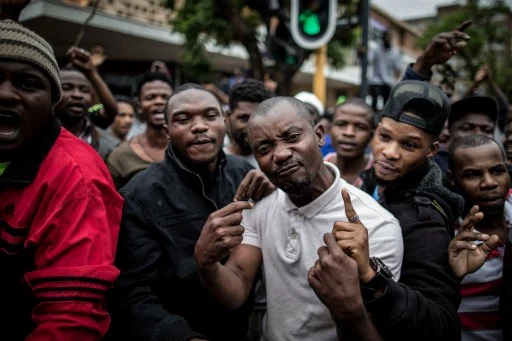
The Nigerian Union in South Africa (NUSA) has issued a security advisory to all Nigerian nationals residing across the country, urging them to maintain high levels of vigilance, secure their immigration paperwork, and steer clear of identified flashpoints ahead of nationwide demonstrations planned for September 30. The upcoming protests, organized by a collective known as the March and March Movement, are expected to focus heavily on undocumented foreign nationals residing within South Africa’s borders.
The security alert comes on the heels of a series of prior anti-immigration demonstrations held earlier in the year, most notably on June 30, which frequently raised tensions between local communities and migrant populations. In a formal statement released on Saturday and signed by the President-General of NUSA, Dr. Smart Nwobi, the union emphasized the critical need for calm, proactive safety measures, and strict adherence to local laws. As anti-migrant rhetoric periodically gains traction in various South African municipalities, the leadership of the Nigerian community is moving swiftly to mitigate potential risks and prevent collateral fallout during the civil unrest.
Background and Context of Migrant-Targeted Demonstrations in South Africa
South Africa has long grappled with complex socioeconomic challenges, including high unemployment rates, housing shortages, and infrastructural deficits. These systemic pressures have historically culminated in anti-immigrant sentiment and localized xenophobic tensions, with foreign nationals—particularly from other African nations such as Nigeria, Zimbabwe, and Somalia—frequently serving as scapegoats for broader economic grievances.
The March and March Movement has positioned itself at the forefront of campaigns targeting undocumented migration, demanding stricter border controls and the mass deportation of individuals lacking valid legal status. While organizers of these protests often frame their demonstrations as peaceful demands for legal enforcement, past instances have frequently devolved into volatile confrontations, property destruction, and physical clashes between local protesters and foreign business owners or residents.
The memory of past episodes of xenophobic violence remains fresh within the immigrant community. Major outbreaks in previous years have resulted in tragic loss of life, widespread looting of foreign-owned shops, and the displacement of thousands of individuals. Consequently, organizations like NUSA view proactive advisories as an essential lifeline for community members, providing actionable safety frameworks to navigate periods of heightened social and political volatility.
NUSA’s Comprehensive Safety Guidelines and Community Advice
To safeguard the lives and properties of Nigerians living in South Africa, Dr. Nwobi’s advisory outlines a strict code of conduct designed to minimize vulnerability and avoid unnecessary escalations. The union has strongly recommended that Nigerians avoid large crowds, public gatherings, and designated protest zones, particularly in major urban centers where demonstrations are historically concentrated.
Furthermore, NUSA has underscored the importance of documentation integrity. All Nigerian expatriates, students, business owners, and workers have been advised to ensure that their passports, temporary or permanent residence permits, work visas, and other statutory identity documents remain valid and are securely kept on their persons or in safe locations at all times. Carrying verifiable legal documentation is viewed as a vital defense against arbitrary harassment or detention during heightened law enforcement sweeps or aggressive civil actions.
In the event of encountering hostile crowds or law enforcement operations, the union has instructed its members to maintain absolute composure. Dr. Nwobi explicitly warned against responding to provocation with physical violence or aggressive rhetoric, noting that taking the law into one’s own hands serves only to endanger individuals, their immediate families, and the collective reputation of the broader Nigerian diaspora.
"No Nigerian should take the law into his own hands," Dr. Nwobi stated in the advisory. "We must not respond to provocation with violence or engage in activities capable of putting ourselves, our families, or the wider Nigerian community at risk."
Additionally, community members have been encouraged to maintain open lines of communication with family members, trusted colleagues, and diaspora leadership networks. Individuals are advised to keep emergency contacts readily accessible and to report any instances of intimidation, direct threats, or suspicious activities immediately to the South African Police Service (SAPS) and NUSA branch executives.
Diplomatic Engagement and Government Intermediation
Beyond grassroots safety measures, the leadership of the Nigerian Union in South Africa is actively engaging with critical diplomatic stakeholders to ensure institutional protection for its citizens. NUSA’s strategy involves continuous dialogue with the Nigerian Mission in South Africa, which encompasses the High Commission in Pretoria and the Consul General’s Office, as well as relevant South African law enforcement and municipal authorities.
The primary objective of these diplomatic engagements is to encourage preemptive security measures, enhance intelligence sharing regarding potential flashpoints, and secure a commitment from South African authorities to protect lawful foreign nationals from targeted violence or harassment. Dr. Nwobi has explicitly called upon the Nigerian Mission to leverage all available diplomatic channels to press the South African government for robust protection guarantees.

"We urge the Nigerian Mission not to relent in its efforts to engage the South African authorities and utilize every diplomatic means available to prevent violence, protect Nigerian lives and property, and ensure that the rights of Nigerians living lawfully in South Africa are respected," Dr. Nwobi emphasized.
NUSA has also drawn a sharp line of distinction between undocumented immigration—a matter strictly for the judicial and immigration authorities of South Africa to manage—and the lawful presence of thousands of Nigerians who contribute positively to the South African economy as professionals, entrepreneurs, and students. The union maintains that law-abiding expatriates should not be subjected to collective punishment or generalized hostility stemming from broader debates over border control policies.
Combating Misinformation and Panic-Inducing Media
In the digital age, social media platforms often exacerbate local tensions through the rapid dissemination of unverified footage, sensationalized voice notes, and alarmist text messages. NUSA has issued a stern warning to the Nigerian community regarding the sharing of unconfirmed media reports that could needlessly fuel panic, incite retaliatory sentiments, or distort the reality on the ground.
The union has committed to utilizing its official communication channels to provide verified, real-time updates as the September 30 protests approach and unfold. Community members have been urged to rely solely on authenticated statements issued by NUSA leadership or official diplomatic sources rather than forwarding viral content of questionable origin.
Broader Security Realities: Gender-Based Violence Crisis in Ekurhuleni
As South African security forces prepare for the upcoming anti-immigration demonstrations, law enforcement agencies are simultaneously grappling with an escalating internal security crisis. On the same day as the NUSA advisory, South African police reported the discovery of yet another body in Ekurhuleni, located east of Johannesburg, marking the tenth tragic death of a woman within the municipality over a span of just two months.
The latest victim was discovered in the Tembisa Township, with local media outlets, including the television network eNCA, reporting that a semi-naked body was found within a local cemetery. Police authorities have launched a comprehensive forensic and investigative response to determine whether the string of killings is interconnected.
"At this stage, we can only confirm the discovery of the body. Crime scene management and all the necessary role players are currently on the scene," stated police spokeswoman Brigadier Brenda Muridili.
The preceding nine victims were predominantly young women in their twenties and thirties, with several bodies bearing disturbing signs of physical trauma, sexual assault, and post-mortem stripping of clothing. The first recorded case in this grim sequence occurred on July 15, when a 37-year-old woman was discovered bound with cable ties and stripped naked. Swift police action led to the arrest of a primary suspect two days later, while subsequent police work resulted in the apprehension and charging of two additional female suspects, aged 31 and 38, in connection with the ninth victim. Investigators have indicated that at least some of these homicides may be rooted in domestic or interpersonal relationship disputes.
Implications for Public Safety and National Stability
The convergence of planned anti-immigration protests on September 30 and the ongoing panic surrounding gender-based violence highlights the multifaceted policing challenges currently facing South African authorities. The country’s law enforcement apparatus is stretched thin as it attempts to maintain public order during civil demonstrations while simultaneously investigating violent crimes that continue to plague vulnerable populations.
For the international community and foreign diaspora groups, these concurrent developments underscore the volatile nature of the security landscape. While gender-based violence represents a systemic domestic crisis affecting all communities irrespective of nationality, anti-immigrant mobilizations present direct, localized risks to foreign nationals who may find themselves caught in the crossfire of socio-political agitation.
The implications for bilateral relations between Nigeria and South Africa remain significant. Both nations have historically invested heavily in diplomatic frameworks aimed at fostering mutual economic cooperation, protecting diaspora investments, and resolving trade disputes amicably. Episodes of civil unrest and xenophobic violence test the resilience of these diplomatic ties, making proactive intervention by organizations like NUSA and responsive policing by SAPS indispensable.
As the September 30 demonstration date draws closer, all eyes will be on security agencies to ensure that constitutional rights to peaceful protest are balanced against the paramount obligation to protect all individuals within South Africa’s borders—regardless of their national origin—from violence, intimidation, and unlawful harm. NUSA continues to monitor the situation closely and stands prepared to issue further updates and protective directives as circumstances dictate.