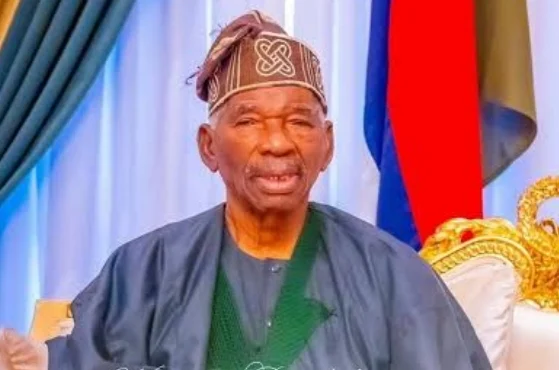
Lagos State Governor Babajide Sanwo-Olu and Deputy Governor Dr. Obafemi Hamzat are slated to lead a high-powered delegation of political leaders, traditional rulers, and Islamic clerics at the historic installation of veteran politician and statesman, Prince Tajudeen Oluyole Olusi (OON), as the Baba Adinni of Yoruba Land.
The landmark ceremony, organized under the auspices of the Council of Islamic Preachers, is scheduled for Saturday, October 3, 2026, at the historic Onikan Stadium in Lagos. The event is expected to draw thousands of faithful, dignitaries, and well-wishers from across the six states of the Southwest geopolitical zone and beyond, serving as a defining moment for Islamic leadership, heritage, and regional unity.
According to a formal statement released by the Secretary of the Planning Committee, Dr. Seyi Bamigbade, comprehensive preparations have been finalized to ensure a seamless and grand celebration. The installation is not merely a religious ascension; it is a profound recognition of Prince Olusi’s decades-long contributions to community development, political stability, interfaith dialogue, and religious harmony in Nigeria.
The Significance of the Baba Adinni Title
In the socio-religious hierarchy of southwestern Nigeria, the position of Baba Adinni is one of the highest and most revered titles bestowed upon a Muslim elder. Translating roughly to "Father of the Faith," the Baba Adinni serves as a primary pillar of support for the Islamic community, acting as a bridge between the Muslim faithful, traditional institutions, and secular governance.
Historically, occupants of this esteemed office are selected based on their unwavering commitment to the propagation of Islam, philanthropy, personal integrity, and an established track record of leadership. Prince Olusi’s ascension to this role places him among a lineage of revered Islamic leaders who have used their influence to foster peace, educational advancement, and infrastructural development within the Muslim ummah.
Organizers have emphasized that the event will celebrate not only Prince Olusi’s personal milestones but also the enduring values of religious tolerance and communal harmony that characterize the Yoruba-speaking states. Southwest Nigeria has long been celebrated for its unique religious landscape, where families often practice both Islam and Christianity harmoniously. The appointment of a unifying figure like Prince Olusi is viewed by religious scholars as a strategic reinforcement of these peaceful coexistence values.
A Gathering of Titans: Who is Expected at Onikan Stadium?
The Onikan Stadium is projected to host a cross-section of Nigeria’s political and religious elite for the October 2026 ceremony. Governor Babajide Sanwo-Olu will serve as the Chief Host of the day, underscoring the state government’s recognition of Prince Olusi’s monumental status in Lagos politics and society. Deputy Governor Dr. Kadiri Obafemi Hamzat is billed to attend as the Special Guest of Honour.
The guest list reflects Prince Olusi’s vast network spanning several decades of public service and party politics. Other prominent Lagosians and national figures slated to grace the occasion include Senator Wasiu Sanni Eshinlokun, representing Lagos Central at the upper legislative chamber; influential political strategist Alhaji Mutiu Are; and Hon. Abdullahi Sesan Olowa, the Chairman of Conference 57, representing the collective leadership of the 57 local government areas and local council development areas in Lagos State.
In addition to political actors, delegations from various Islamic organizations, including the Nasrul-Lahi-l-Faith Society (NASFAT), the Jamatul Islamiyat of Nigeria, the Ansar-Ud-Deen Society, and the Conference of Islamic Preachers, are mobilizing their members to witness the historic coronation. Traditional rulers, including first-class Obas from Lagos, Ogun, Oyo, Osun, Ondo, and Ekiti states, are also expected to add royal color and cultural prestige to the proceedings.
Chronology of a Statesman: The Life and Times of Prince Tajudeen Olusi
To fully comprehend the magnitude of the upcoming installation, observers must look back at the extensive trajectory of Prince Tajudeen Oluyole Olusi. Born into the revered Olusi royal family of Lagos, Prince Olusi’s life has been defined by a relentless commitment to public service, grassroots mobilization, and progressive governance.
During the Second Republic in the late 1970s and early 1980s, Olusi emerged as a formidable political actor under the banner of the Unity Party of Nigeria (UPN), a progressive political platform championed by Chief Obafemi Awolowo. His capability as an astute organizer and grassroots mobilizer quickly earned him respect among his peers and constituents. Over the decades, he transitioned through various political epochs, remaining a steadfast pillar of the progressive political family in Lagos State.
Olusi’s legislative credentials include serving as a member of the Federal House of Representatives, where he contributed robustly to national debates and policy formulation. Beyond elected office, he has functioned as an elder statesman and a stabilizing force within the ruling All Progressives Congress (APC), mentoring younger generations of politicians and helping to resolve internal party disputes.
Parallel to his political career, Prince Olusi has maintained an active, foundational role in Islamic affairs. He has consistently used his personal resources and public influence to support the construction of mosques, sponsor Islamic education, and champion the welfare of the less privileged. His conferment as the Baba Adinni of Yoruba Land is seen by many as the culmination of a life dedicated to service to God and humanity.
Planning and Logistics: Ensuring a Seamless Celebration
The Planning Committee, led by Dr. Seyi Bamigbade, has been working tirelessly to coordinate the numerous logistics associated with an event of this magnitude. Onikan Stadium, a modern sporting and events facility located in the heart of Lagos Island, was chosen for its strategic accessibility, security architecture, and capacity to host large crowds.
Security protocols are being finalized in collaboration with the Lagos State Police Command, the Department of State Services (DSS), the Lagos State Traffic Management Authority (LASTMA), and the Rapid Response Squad (Squad) to ensure the safety of dignitaries, foreign guests, and the general public. Traffic diversion plans around the Onikan, Marina, and Tafawa Balewa Square (TBS) corridors will be announced closer to the date to mitigate potential congestion.
Furthermore, sub-committees focusing on media relations, hospitality, protocol, and seating arrangements have been inaugurated to cater to the diverse segments of attendees, ranging from foreign diplomats and federal lawmakers to local community leaders and religious faithful.
Broader Impact and Implications of the Installation
Analysts and political commentators have weighed in on the broader implications of Prince Olusi’s new religious title. While the position is strictly spiritual and communal, the timing and high-profile nature of the event carry significant socio-political resonance.
First, the ceremony underscores the enduring intersection between traditional leadership, religious institutions, and secular governance in Nigeria. In many parts of the country, religious titles bestowed upon respected elders serve as informal mechanisms for conflict resolution, moral suasion, and community mobilization. By bringing together leaders from diverse political and ethnic backgrounds, the event reinforces national cohesion at a time when socio-economic challenges require collaborative leadership.
Second, the choice of Prince Olusi—a veteran progressive politician—highlights the deep roots of Islamic scholarship and leadership within the progressive political movement in southwestern Nigeria. It bridges the often-artificial divide between modern statecraft and traditional religious values, demonstrating that public servants can maintain deep piety and community service concurrently.
Religious bodies have also expressed optimism that Olusi’s elevation will catalyze greater inter-faith dialogue. As Baba Adinni of Yoruba Land, Olusi is expected to use his new platform to advocate for religious tolerance, youth empowerment, and socio-economic interventions aimed at alleviating poverty across the region.
Conclusion
As the countdown to October 3, 2026, continues, anticipation reaches a fever pitch across Lagos State and the wider Yoruba-speaking territories. The installation of Prince Tajudeen Oluyole Olusi as the Baba Adinni of Yoruba Land promises to be a watershed moment—a celebration of longevity, integrity, and unyielding devotion to faith and community. With Governor Sanwo-Olu, Deputy Governor Hamzat, and a constellation of Nigeria’s finest leaders set to grace Onikan Stadium, the event will undoubtedly leave an indelible mark on the annals of Nigerian history, honoring a quintessential leader who has spent a lifetime building bridges across political, social, and religious divides.