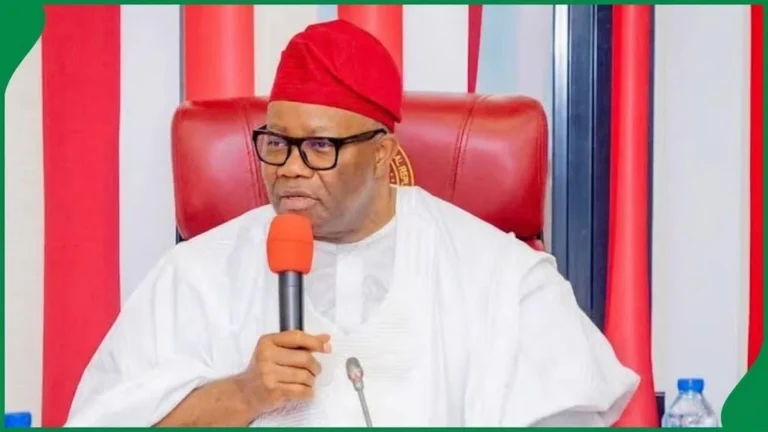
The political landscape in Nigeria has been stirred by a high-stakes confrontation between the President of the Senate, Godswill Akpabio, and the vice-presidential candidate of the African Democratic Congress (ADC), Rotimi Amaechi. The tension escalated on Saturday, November 14, 2026, when Amaechi, speaking at a political rally in Bauchi State, leveled serious allegations against the Senate President. Amaechi claimed that during his tenure and oversight of affairs involving the Niger Delta Development Commission (NDDC), Akpabio was instrumental in orchestrating a 50 per cent deduction from payments due to contractors working with the commission.
These accusations, coming amidst a heightened period of political campaigning, have triggered a swift and robust rebuttal from the Senate President’s office. The conflict highlights the ongoing scrutiny of public institutions, particularly the NDDC, which has historically been a focal point for debates regarding financial transparency, project execution, and administrative oversight in the Niger Delta region.
The Genesis of the Allegation
The allegation made by Rotimi Amaechi, a former Minister of Transportation and former Governor of Rivers State, was delivered before a crowd of supporters in Bauchi. While the rally was focused on the ADC’s campaign objectives, Amaechi pivoted to the topic of government transparency and the management of federal agencies. He explicitly accused Akpabio of introducing a policy of 50 per cent "cuts" or deductions from payments meant for contractors handling NDDC projects.
For the public and political observers, the accusation is significant because it touches upon the perennial challenges surrounding the NDDC, an agency frequently embroiled in controversy over abandoned projects and allegations of financial mismanagement. By linking the Senate President directly to these alleged deductions, Amaechi has effectively positioned himself as a whistleblower on the campaign trail, seeking to contrast his political platform with what he characterizes as the failings of the current legislative leadership.
Official Rebuttal: The Response from the Senate President
In a formal statement released on Sunday, November 15, 2026, the Senate President, through his Special Adviser on Media and Publicity, Eseme Eyiboh, issued a stern demand for proof. The response was not merely a denial but a legalistic challenge, calling for specific details that would allow for verification.
"The former governor offered no contract documents, payment records, identifiable transactions, or other verifiable particulars to substantiate his accusation," Eyiboh stated. The office of the Senate President emphasized that the gravity of such claims requires more than mere political rhetoric. Eyiboh listed a series of questions intended to pin the accuser down to specifics: Which contracts were subjected to these deductions? Which contractors were affected? At what point in time were these payments processed? And, crucially, what evidence links the Senate President personally to these financial maneuvers?
The Senate President’s camp has characterized the accusation as a smear campaign designed to distract the electorate. They argue that if Amaechi possesses genuine evidence of corruption or financial malpractice within the NDDC, he is duty-bound to report such findings to the Economic and Financial Crimes Commission (EFCC) or the Independent Corrupt Practices and Other Related Offences Commission (ICPC), rather than using the rally stage as a platform for unsubstantiated claims.
Historical Context: The NDDC and Financial Oversight
To understand the weight of this allegation, one must consider the historical context of the NDDC. Established in 2000, the commission’s mandate is to facilitate the rapid, even, and sustainable development of the Niger Delta. However, the commission has faced numerous audits and investigations over the past two decades.
The issue of contractor payments is a perennial pain point. Many contractors have, at various times, complained of delayed payments, stalled projects, or arbitrary administrative bottlenecks. When a high-ranking politician alleges that a specific percentage is being "deducted" from payments, it echoes long-standing fears among the public that public funds are being diverted through "kickbacks" or administrative extortion.
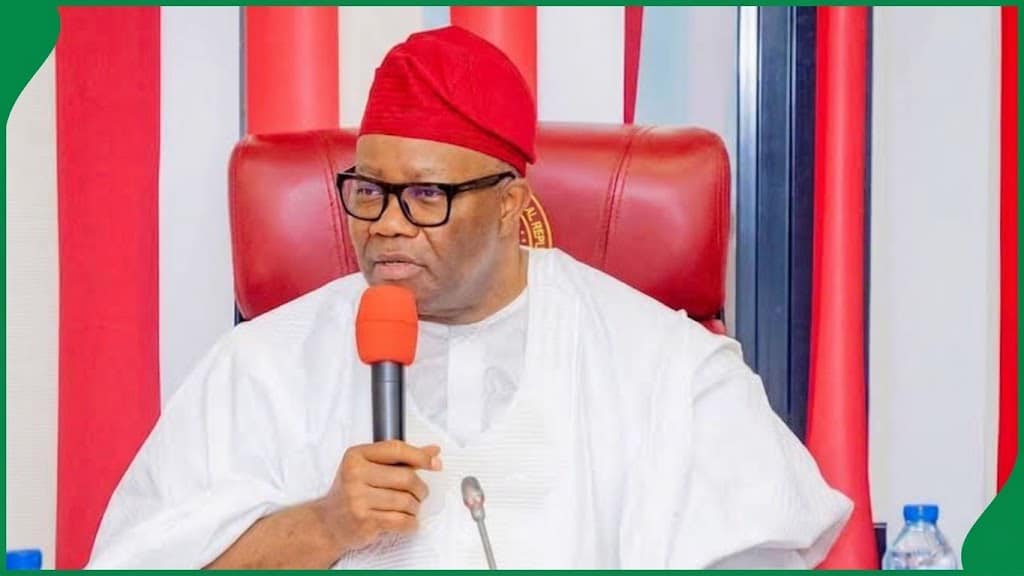
By challenging the allegation so aggressively, Akpabio is essentially betting on the lack of a paper trail. The Senate President’s media team is highlighting the fact that procurement in federal agencies like the NDDC is subject to strict budgetary and financial guidelines under the Public Procurement Act. Any 50 per cent deduction would require a massive trail of documentation, which, according to his aides, does not exist.
A Counter-Offensive: Scrutinizing the Past
The response from the Senate President did not remain purely defensive. In an effort to shift the narrative, Eyiboh steered the conversation toward the past administration of Rotimi Amaechi in Rivers State (2007–2015). This tactical move—often referred to in Nigerian politics as "whataboutism"—serves to dilute the credibility of the accuser by questioning their own record of governance.
The statement specifically highlighted the Port Harcourt Monorail project, a signature infrastructure project during Amaechi’s tenure as governor. The monorail, which was intended to modernize public transportation in the Rivers State capital, ultimately became a subject of intense public debate due to its enormous cost and the fact that it remained largely uncompleted and non-functional for years. Similarly, the "Malaria-free Rivers State" initiative was brought up as an example of a project that, according to the Senate President’s camp, requires a fresh audit to determine whether the public received value for the funds allocated to it.
By raising these issues, the Senate President is attempting to frame the current exchange as a debate about "public accountability" that should apply equally to all public officials, not just those currently in power. The message is clear: those who live in glass houses should not throw stones.
Broader Implications and Political Fallout
The exchange between Akpabio and Amaechi has significant implications for the ongoing election season. First, it signals that the campaign discourse is moving away from policy-based debates toward personal attacks and historical record-checking. Second, it highlights the increasing pressure on candidates to provide evidence for their claims as the electorate becomes more media-literate and demanding of facts.
The refusal of the Senate President to let the allegation slide suggests that he views this as a critical moment to assert his integrity. In the Nigerian political context, being accused of financial impropriety in the NDDC can be career-ending if not addressed decisively. By demanding documentation, Akpabio is placing the burden of proof squarely on Amaechi.
From a governance perspective, this spat serves as a reminder of the fragility of public trust in federal institutions. Regardless of who is correct, the constant back-and-forth between political elites over the management of the NDDC serves to reinforce the perception that the commission remains a theater for political patronage rather than a vehicle for regional development.
The Need for Institutional Resolution
While both parties are engaged in a war of words, the public interest lies in the verification of these claims. If there is indeed evidence of a systemic 50 per cent deduction from NDDC contractors, it would represent a massive breach of financial regulations that should be handled by investigative authorities.
However, if the allegation is found to be politically motivated, it underscores the urgent need for a more civil and evidence-based political culture in Nigeria. As the 2026 electoral cycle reaches its peak, the ability of voters to discern between substantive whistleblowing and tactical character assassination will be tested. For now, the challenge remains on the table: Amaechi must either produce the documentation to back his claims or face the political consequences of making unverified accusations against a high-ranking official of the federal government.
The Senate President’s office has concluded that public accountability is not a selective endeavor but a continuous responsibility. As the dust settles on this particular confrontation, the focus will likely return to the official conduct of the NDDC and the performance of former state governors, leaving the public to judge which side of the argument carries more weight.