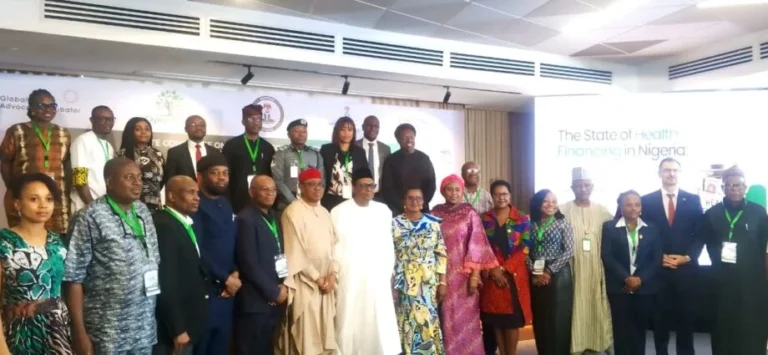
The pursuit of a robust, self-sustaining healthcare system in Nigeria has reached a critical juncture, as policymakers, health experts, and civil society leaders convene to demand a paradigm shift in how the nation funds its health sector. During the recent National Convergence on Sustainable Health Financing held in Abuja, organized by the Senate Committee on Health in partnership with the Caywood Brown Foundation, participants highlighted the inherent dangers of Nigeria’s heavy reliance on external donor funding. The discourse centered on an urgent need for legislative intervention, fiscal discipline, and a transition toward domestic resource mobilization to ensure that the Basic Health Care Provision Fund (BHCPF) and other critical health initiatives are adequately resourced to meet the needs of a growing population.
The Imperative for Fiscal Sovereignty in Health
For decades, Nigeria’s health sector has been characterized by what experts describe as "tokenistic investment." Despite the country’s status as a leading economy in Africa, its per capita expenditure on health has remained persistently low. Coordinating Minister of Health and Social Welfare, Prof. Muhammad Pate, set a somber tone for the convergence, noting that for years, the nation spent less than $20 per capita on healthcare. According to Prof. Pate, this fiscal strategy—or lack thereof—is a direct reflection of historical national priorities. He argued that if Nigeria aspires to provide world-class healthcare, the government and the citizenry must accept the reality that high-quality services require significant, sustained financial commitment.
The event served as a clarion call for the National Assembly to fast-track pending legislation, specifically Senate Bills 713 and 886, which are designed to institutionalize predictable health financing architectures. These reforms are not merely bureaucratic; they are intended to serve as the bedrock for universal health coverage (UHC) by shifting the focus from sporadic, donor-dependent funding to a more reliable, tax-funded model.
Chronology of Recent Health Financing Initiatives
The current push for reform is the culmination of years of advocacy and policy dialogues. The trajectory of this movement can be traced through several key milestones:
- 2014: The passage of the National Health Act (NHAct) provided the legal framework for the Basic Health Care Provision Fund (BHCPF), intended to be funded by at least 1% of the Consolidated Revenue Fund.
- 2020-2022: The COVID-19 pandemic exposed the fragility of Nigeria’s health system, prompting intensified discussions on epidemic preparedness and the need for domestic financing.
- 2025: The National Health Financing Dialogue served as a catalyst for bringing together stakeholders from the finance and health sectors to identify gaps in resource allocation.
- September 2026: The National Convergence on Sustainable Health Financing was convened to address the legislative bottlenecks preventing the full implementation of health reforms and to advocate for the expansion of the Sugar-Sweetened Beverage (SSB) tax as a sustainable revenue stream.
Data-Driven Analysis of the Health Gap
The urgency expressed by stakeholders is backed by sobering statistics. Nigeria continues to battle a rising tide of non-communicable diseases (NCDs), including hypertension, diabetes, and cardiovascular complications. The World Health Organization (WHO) has frequently identified NCDs as a leading cause of mortality in low-to-middle-income countries, yet the Nigerian budgetary allocation for preventive health measures remains dwarfed by curative costs.
Furthermore, the BHCPF, which was designed to be the primary vehicle for providing a minimum package of healthcare services to the poorest citizens, has faced implementation hurdles. Data from the Ministry of Health indicates that while the federal government has made strides in allocating funds, many state governments have failed to provide the mandatory counterpart funding required to unlock full disbursements. This lack of compliance at the sub-national level has left millions of vulnerable Nigerians without access to essential primary healthcare, effectively nullifying the legislative intent of the NHAct.
Perspectives from the Legislature and Executive
Senator Ipalibo Harry-Banigo, Chairman of the Senate Committee on Health and a primary sponsor of the pending bills, emphasized that the reform process is about creating an ecosystem where development assistance acts only as a complement to, rather than a substitute for, national investment. "We are building a structure that will outlast political administrations," she stated, noting that legislative backing is the only way to ensure that health becomes a non-negotiable line item in both federal and state budgets.
Representing the House of Representatives, Chairman of the Committee on Healthcare Services, Rep. Amos Magaji, stressed that UHC cannot be achieved through short-term interventions. He noted that the legislature’s role extends beyond passing bills; it involves rigorous oversight to ensure that funds meant for primary healthcare actually reach the clinics and community health centers in the most remote areas.

Adding to the chorus, Dr. Jide Idris, Director-General of the NCDC, argued that the current financing model is overly reactive. By shifting resources toward prevention-focused investments—such as public health awareness, vaccination campaigns, and nutritional education—the government could significantly reduce the long-term financial burden on the national health system.
The Role of Innovative Financing: The SSB Levy
A central pillar of the proposed financial reform is the expansion of the Sugar-Sweetened Beverage (SSB) levy. Advocates, including Prof. Emmanuel Alhassan of the Global Health Advocacy Incubator, suggest that the tax serves a dual purpose: it discourages the consumption of unhealthy products linked to NCDs while simultaneously generating a dedicated revenue stream for health interventions.
Economists and public health analysts have argued that the SSB tax represents a "win-win" scenario. By ring-fencing these proceeds specifically for the treatment and management of NCDs, the government can create a sustainable funding loop that does not rely on the volatility of oil prices or the fluctuating goodwill of international donors.
Challenges to Implementation: The Sub-National Hurdle
Despite the enthusiasm in Abuja, the real test of these reforms lies in the 36 states of the federation. The "domestication" of health financing laws remains the greatest obstacle. Many state governors, citing economic constraints, have been reluctant to commit to the legislative reforms required to mirror federal health policies.
Mr. Ademuyiwa Damilola of the Legislative Initiative for Sustainable Development (LISDEL) highlighted that as donor funding begins to taper off—as is common in middle-income country transitions—states will find themselves in a precarious position if they have not established their own legislative frameworks for health. The reliance on the federal government for health service delivery is a model that is increasingly viewed as unsustainable given the sheer scale of the population and the geographical diversity of the country.
Looking Toward the Future
The convergence concluded with a clear consensus: the 10th National Assembly has a narrow window of opportunity to cement a legacy of health security. With the legislative tenure nearing its end, the call for the House of Representatives to concur with the Senate on the pending health bills is urgent. If these bills are passed and subsequently receive presidential assent, it would represent the most significant structural change to Nigeria’s health sector since the introduction of the National Health Insurance Authority (NHIA) reforms.
The implications of these actions go beyond balance sheets. They speak to the fundamental right of every Nigerian to access quality healthcare. As the Coordinating Minister of Health and Social Welfare, Prof. Pate, poignantly noted, the choices made today regarding health investment will define the quality of life for generations to come. The message from the Abuja convergence is clear: the era of relying on external support must give way to a new reality of national ownership, accountability, and strategic, domestic investment.
Whether these discussions translate into tangible progress on the ground remains to be seen, but the alignment between the executive, legislative, and civil society sectors suggests that the political will to reform Nigeria’s health financing architecture is at its strongest point in recent history. The success of these initiatives will ultimately be measured not by the rhetoric of the convergence, but by the tangible improvement in health outcomes for the average Nigerian citizen.




