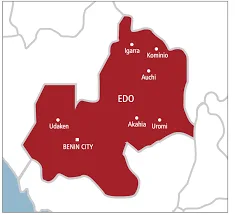
The political landscape of Edo State has been plunged into mourning following the brutal murder of Julius Bello, a prominent All Progressives Congress (APC) chieftain, who was allegedly killed by his own son, Irobudo Bello, in a shocking incident that has left the Fugar community in Etsako Central Local Government Area in a state of profound disbelief. The Edo State Police Command has officially confirmed the incident, which occurred over the weekend, sparking a massive manhunt for the suspect who fled the scene immediately after the crime.
Chronology of the Tragic Event
The sequence of events leading to the death of the man popularly known as "De Lord Ogata" began late last week when the suspect, Irobudo, returned to his ancestral home in Fugar from Lagos. According to preliminary reports gathered from family members and neighbors, the atmosphere in the household was initially unremarkable, masking the volatile agitation brewing within the suspect.
On Sunday, the situation took a lethal turn. Witnesses suggest that the suspect, acting under the influence of a misguided spiritual directive, confronted his father. Family sources indicate that Irobudo had allegedly visited a local prophet who claimed that the cause of his financial stagnation and general misfortune was his father, Julius Bello. Armed with this belief, the suspect reportedly retrieved a heavy sledgehammer and struck his father on the head. The impact was fatal, resulting in the immediate death of the APC Ward Three Chairman.
Following the assault, the suspect fled the premises, disappearing before neighbors or local authorities could intervene. By Monday morning, the news of the murder had spread throughout Etsako Central, drawing condemnation from political allies and community leaders alike.
Official Police Response and Investigation
The Edo State Police Command, through its spokesperson, Eno Ikoedem, issued a formal statement on Monday confirming that an investigation into the homicide has been launched. The police have categorized the incident as a top-priority criminal case, given the high-profile status of the deceased within the local political structure.
"The police have commenced an investigation into the matter, and the suspect is currently at large," Ikoedem stated. She emphasized that forensic evidence is being gathered from the scene of the crime to establish a definitive timeline and to assist in the apprehension of the suspect. While the police have not yet released a warrant for his arrest, they have urged members of the public to provide any information that could lead to his capture.
The investigation is expected to delve into the suspect’s movements since leaving Lagos and to identify the "prophet" or spiritual practitioner who allegedly influenced the suspect’s actions. Legal experts suggest that if apprehended, Irobudo will face charges of culpable homicide punishable by death under the Nigerian Criminal Code.
Context: Domestic Violence and Superstition in Nigeria
The killing of Julius Bello highlights a recurring and disturbing pattern of violence in Nigeria, often linked to the intersection of economic desperation and superstitious beliefs. While political violence is common in the lead-up to elections, this incident is categorized as domestic violence fueled by "spiritual extortion."
Sociologists often point to the rise of informal, unverified spiritual centers that prey on the frustrations of unemployed youth. In many instances, these practitioners provide "divine" explanations for socioeconomic failures, often scapegoating family members—particularly parents—as the cause of a child’s lack of success. This is a form of psychological manipulation that has, in several documented cases, led to elder abuse, abandonment, or, as in the case of Julius Bello, cold-blooded murder.
Data from the National Bureau of Statistics (NBS) and various civil society organizations suggest that domestic violence remains a critical challenge in Nigeria, with familial disputes frequently escalating due to a lack of mental health resources and the prevalence of extremist spiritual beliefs. The murder of a political figure in this manner underscores the vulnerability of households to misinformation and the dangerous influence of radicalized spiritualism.
Impact on Local Politics and the APC
Julius Bello was a key figure in the APC’s grassroots machinery in Etsako Central. As the Ward Three Chairman, he played an instrumental role in mobilizing voters, managing party logistics, and maintaining cohesion within the local political hierarchy. His death represents a significant loss to the party’s local structure.
In a statement likely to be issued in the coming days, local APC chapters are expected to call for justice and emphasize the need for security in the Fugar area. The vacuum left by his sudden death will require the party to reorganize its leadership in Ward Three, a process that is now clouded by the trauma of his passing. Political analysts note that such incidents can often destabilize local party operations, as members grapple with the grief of losing a leader to such a violent and intimate crime.
Socio-Economic Implications and Public Reaction
The community of Fugar is currently reeling from the tragedy. Local leaders have described the deceased as a man of influence and character who was deeply involved in the welfare of his community. The fact that the perpetrator is his own son has added a layer of profound sorrow, making the mourning process particularly difficult for the extended family.
Public reaction on social media and local radio stations has been one of outrage. Many residents are calling for a crackdown on "prophets" who propagate narratives that incite violence against relatives. There is an increasing demand for the regulation of spiritual homes and a call for better mental health support systems to identify individuals who are at risk of being radicalized by these destructive belief systems.
Broader Societal Analysis: The Need for Institutional Intervention
The murder of Julius Bello serves as a grim case study for the need for comprehensive social intervention in Nigeria. The incident raises several critical questions for policymakers:
- Regulation of Spiritual Practices: Should there be stricter monitoring of spiritual centers that operate outside the purview of established religious bodies? The ease with which individuals can establish "prophecy centers" and provide guidance that leads to criminal acts is a growing public safety concern.
- Mental Health Awareness: There is a significant need for public awareness campaigns that address the mental health implications of economic hardship. When young adults feel the weight of unemployment and poverty, they become susceptible to irrational explanations for their plight.
- Community Policing and Intelligence: The ability of a suspect to commit such a crime and remain at large highlights potential gaps in local intelligence gathering. Strengthening the relationship between the police and local vigilante groups could help in monitoring suspicious activities before they escalate into violence.
Conclusion: A Call for Justice
As the Edo State Police Command intensifies its search for Irobudo Bello, the focus remains on ensuring that justice is served. The tragedy of a father killed by his son is a devastating reminder of the fragility of familial bonds when strained by economic pressure and exploited by dangerous superstitions.
For the people of Etsako Central, the death of Julius Bello is more than just the loss of a politician; it is a wake-up call regarding the dangers of unchecked spiritual influence and the urgent need for a more informed and supported citizenry. The police are continuing their efforts to track the suspect, and the community waits in hope that the perpetrator will be brought to account for his actions.
The APC leadership in Edo State is expected to hold a memorial service in honor of the late chairman once the family has completed the necessary rites. Until then, the case remains an active investigation, with the law enforcement agencies determined to bring closure to a case that has left a community in deep pain and reflection. The tragedy of the Bello family stands as a somber testament to the complexities of modern Nigerian society, where tradition, politics, and the search for fortune sometimes collide with fatal consequences.