The Genesis of an Unconventional Proposal
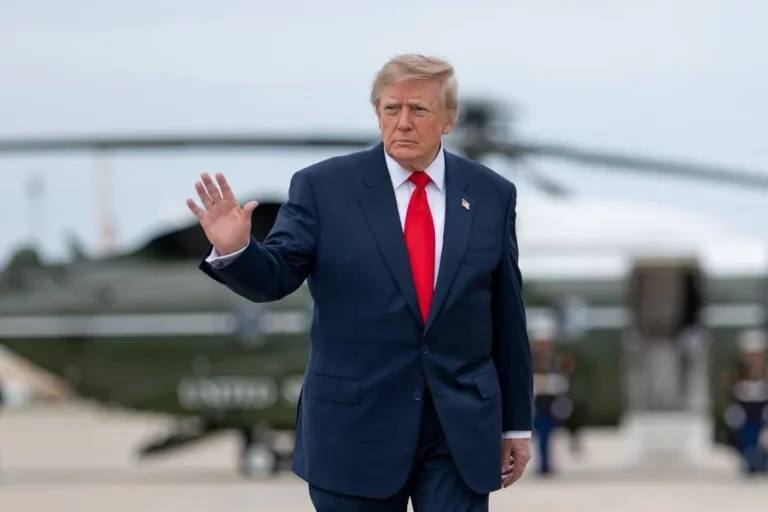
The request emerged on a Saturday, catching many political observers off guard. President Trump, known for his direct communication style, framed the potential appointment as a solution to what he perceives as a need for a more aggressive, combat-ready approach to media relations. In his post, the President wrote, “Dana will be a Press Secretary like none other. Dana, please take the job!”
Accompanying the text were images of high-profile UFC fighters, whom Trump suggested could be integrated into the administration’s strategy to counter the "Lunatic Left." The inclusion of figures such as Russian mixed martial arts star Islam Makhachev underscores the President’s desire to leverage the "warrior" brand that White has meticulously cultivated over the last two decades. For many, this is a clear signal that the administration intends to prioritize cultural influence and high-octane messaging over the traditional, more sterile style of press briefings.
A History of Mutual Support and Strategic Alliance
To understand why a President would court a fight promoter for a cabinet-level communications role, one must examine the long-standing, symbiotic relationship between Donald Trump and Dana White. Their history spans back to the early 2000s, a period when the UFC was struggling for legitimacy and facing existential threats from regulators and the media.
In the mid-1990s, the sport of mixed martial arts (MMA) was under fire. Senator John McCain famously branded it "human cockfighting," leading to widespread bans across various U.S. jurisdictions. By 2001, when White and his business partners at Zuffa purchased the struggling organization for a mere $2 million, they were essentially pariahs in the sports world. It was during this precarious period that Donald Trump extended a lifeline. He allowed the UFC to host two major events at the Trump Taj Mahal in Atlantic City, New Jersey.
This act of corporate hospitality was more than just a business transaction; it was a foundational moment for the UFC’s survival. White has frequently credited Trump with being one of the few high-profile figures who stood by the organization when the mainstream media and political establishment sought its dissolution. This loyalty has been reciprocated in kind. White has been a consistent fixture at Republican National Conventions and has vocally supported Trump’s presidential bids in 2016, 2020, and 2024. The relationship reached a symbolic peak earlier this year when the UFC staged a fight event on the White House lawn, signaling the deep integration of the brand into the Trump political orbit.
The Vacancy and the Search for a New Voice
The impetus for this potential appointment is the sudden vacancy in the press office. Following the mid-October departure of Katie Zacharia—who left the post after only a few days—the administration has been in a state of flux regarding its public-facing communications. The turnover in the press secretary position has been a point of contention for critics of the current administration, who argue that consistent messaging is essential for stable governance.
By targeting a figure like Dana White, the administration may be attempting to bypass the traditional press corps by installing someone who possesses a combative, high-energy, and unconventional approach to media scrutiny. White is no stranger to the spotlight, nor is he a stranger to confrontation. His tenure as UFC president has been defined by a "no-nonsense" approach that often involves direct, sometimes hostile, exchanges with members of the sports media.
The Media Confrontation: A Pattern of Behavior
Critics of the potential appointment point to White’s long, documented history of fractious relationships with the press as a primary concern. Throughout his career, he has not shied away from using his platform to attack journalists who he believes are biased or misinformed.
In 2020, during the height of the COVID-19 pandemic, White faced intense criticism for his efforts to keep the UFC operational while other major leagues suspended activities. He famously engaged in combative exchanges with journalists who questioned the safety protocols and the morality of continuing to host events. Furthermore, in 2009, he faced a massive public outcry following the release of an expletive-filled video that included an anti-gay slur directed at a reporter. While White has since matured in his public messaging, his history suggests that a "White-led" press room would likely be one of the most hostile environments for traditional journalists in the history of the Republic.
Official Reactions and the Question of Reality
As of the current reporting, there has been no formal confirmation from either the White House or TKO Group Holdings, the parent company of the UFC. The ambiguity surrounding the offer is compounded by White’s own response on social media. After the President’s post, White shared a photograph of himself standing behind the official White House lectern with the caption, "On to the next chapter."
Whether this was an acknowledgement of a serious offer, a nod to a future, or merely a sophisticated piece of digital theater remains a subject of intense speculation. Political analysts are divided: some view it as a genuine attempt by Trump to disrupt the status quo, while others see it as a calculated distraction intended to keep the media focused on the President’s social media narrative rather than the substantive policy challenges currently facing his administration.
Broader Implications for Governance and Media
The prospect of a UFC executive leading the White House press office carries profound implications for the nature of political communication. Historically, the role of the Press Secretary has been to serve as a bridge between the President and the public, acting as a translator for complex policies and a moderator for the fourth estate.
If White were to assume the role, the position would likely shift toward a more confrontational, spectacle-driven model. This would mirror the broader trend in modern politics, where traditional gatekeepers are increasingly sidelined in favor of direct-to-consumer digital communication. For the administration, the goal is likely to energize the base and challenge the perceived narrative dominance of legacy media outlets. For the press, however, it represents a potential breakdown in the norms of accountability.
Economic and Strategic Factors
From an economic perspective, the integration of the UFC into the executive branch of the government would be unprecedented. White oversees a multibillion-dollar enterprise that relies on complex international broadcasting rights, athlete contracts, and regulatory compliance across dozens of countries. Transitioning from the world of fight promotion to the world of federal policy requires a specific set of skills that, while overlapping in terms of crisis management, differ significantly in the realm of public policy.
Moreover, the international reach of the UFC could potentially be leveraged for soft-power diplomacy. Trump’s mention of Russian fighter Islam Makhachev suggests that the administration may be looking to use the "warrior" ethos to bolster national pride and project strength on the global stage.
Conclusion: A Turning Point in Political Theater
As the public awaits an official word, the situation serves as a stark reminder of the evolving landscape of American politics. The potential transition of Dana White from the cage to the lectern is not merely a personnel decision; it is a fundamental shift in how the government communicates its intentions. Whether this ends in a formal appointment or remains a viral moment in the history of the digital age, it underscores the President’s commitment to dismantling the traditional barriers of Washington D.C. and replacing them with a style of governance that prioritizes loyalty, strength, and the power of the spectacle. For now, the world of politics and the world of combat sports remain on a collision course, waiting to see if the next chapter in the White House press room will indeed be written by one of the most polarizing figures in sports history.