Fifty years after the first scientifically documented Ebola epidemic emerged near the Ebola River in what was then Zaire, the Democratic Republic of Congo (DRC) finds itself once again at the epicenter of a major public health crisis. The current outbreak, driven by the Bundibugyo strain of the genus Orthoebolavirus, has resulted in over 10,000 recorded cases, with the pathogen spreading across borders into Kenya and Nigeria. This resurgence has reignited a global debate regarding the slow pace of vaccine development for non-Zaire strains and the logistical hurdles that continue to impede the containment of one of the world’s most feared viral diseases.
A Chronology of Conflict and Contagion
The history of the Ebola virus is marked by sporadic, devastating outbreaks that have often caught global health authorities off guard. The first known encounter occurred in 1976, when the Zaire Ebola virus decimated remote villages. Since that time, the virus has revealed itself in several distinct genetic variants, including the Sudan virus and the Bundibugyo virus.
The Bundibugyo strain was first identified during an outbreak in the Bundibugyo District of Uganda in 2007. At the time, it was recognized as a distinct species within the Ebolavirus genus, characterized by a different clinical profile and genetic makeup compared to the more frequently studied Zaire strain. A secondary, smaller outbreak occurred in the DRC in 2012, providing a clear warning to the international medical community that this specific variant remained a persistent threat. Despite these earlier warnings, the global research pipeline failed to produce a licensed, mass-deployable vaccine specifically targeted at the Bundibugyo virus, leading to the current, uncontrolled surge.
The Paradox of Preventability
From an immunological perspective, Ebola is considered a prime candidate for vaccination. Unlike influenza, which undergoes constant antigenic drift, or HIV, which utilizes complex mechanisms to evade the human immune system, the Ebola virus remains relatively stable. Its genetic structure does not mutate with the frequency or volatility seen in other respiratory or retroviruses.
Despite this biological advantage, the lack of a prophylactic tool for the Bundibugyo variant has created a dangerous gap in the medical arsenal. Experts in tropical medicine, such as Torsten Feldt of Düsseldorf’s University Hospital, characterize this as a significant missed opportunity. "We had the diagnostic identification and the epidemiological evidence from 2007 and 2012," Feldt noted. "The failure to prioritize the development of therapeutic options during the intervening years has directly contributed to the loss of critical time during this current, widespread epidemic."
The Scientific Challenge: Why Progress Stalled
The slow development of a Bundibugyo-specific vaccine is not merely a matter of scientific capability but a reflection of resource allocation and market prioritization. Research and development in the field of infectious diseases are frequently driven by the perceived risk profile of a pathogen. Historically, the Zaire Ebola virus has caused the most frequent and most lethal outbreaks, prompting the World Health Organization and international research bodies to focus their funding and clinical trial efforts on that specific variant.
Leonie Mayer of the German Center for Infection Research (DZIF) notes that while pre-clinical trials could have been conducted earlier, the validation of vaccine efficacy requires the context of an active outbreak. "We cannot easily run Phase III trials in the absence of a circulating virus," Mayer explained. "However, the lack of proactive preparation for the Bundibugyo variant meant that when this outbreak accelerated, we were essentially starting from a point of deficit."
The Potential of Cross-Reactive Immunity
A significant breakthrough in recent months has been the study of the licensed Ervebo vaccine. Initially developed and approved solely for the Zaire Ebola virus, researchers are now investigating whether it can confer immunity—or at least partial protection—against other strains.
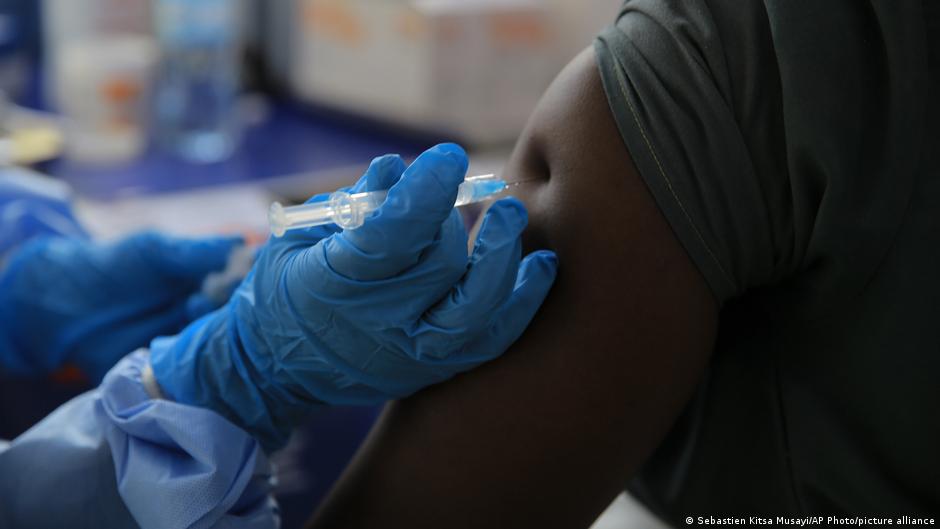
A recent study authored by Mayer and her colleagues at the University Medical Center in Hamburg-Eppendorf revealed that individuals vaccinated with Ervebo show T-cell cross-reactivity against the Bundibugyo virus, and to a lesser extent, the Sudan virus. While this is a promising discovery, it remains an open scientific question whether this cellular response is sufficient to prevent infection or merely mitigate the severity of the disease. "We know the immune cells recognize the virus," Mayer said, "but we do not yet have the data to confirm if this translates to clinical protection."
Ethical Dilemmas in Mass Vaccination
The current crisis presents a complex ethical conundrum for public health officials. There is significant pressure to deploy existing, licensed vaccines in the hope that they might provide some level of protection. However, experts like Jürgen May of the Bernhard Nocht Institute warn against "blind" mass vaccination.
"If we distribute a vaccine on a large scale without proven efficacy against this specific variant, we risk creating a false sense of security," May stated. "Furthermore, if the intervention fails, it could severely damage the trust of local communities in future, more effective public health measures." This skepticism is particularly potent in regions where historical mistrust of external medical interventions, often exacerbated by conflict and misinformation, has already hampered contact tracing and isolation efforts.
Logistical Hurdles and the "Identification-Containment" Gap
The modern struggle against Ebola highlights that even with advanced diagnostics, medical innovation is only as effective as the infrastructure that supports it. Identifying the virus is faster today than at any point in history, yet the "time-to-containment" has not seen a similar reduction.
In the DRC, the response is frequently crippled by structural challenges:
- Infrastructure: Inadequate road networks make the transportation of cold-chain-dependent medical supplies and biological samples dangerous and slow.
- Security: Ongoing regional conflicts and attacks on healthcare facilities disrupt the work of medical personnel and prevent the deployment of mobile clinics.
- Contact Tracing: The Bundibugyo virus presents a unique challenge; it appears to be slightly less aggressive than the Zaire variant, meaning infected individuals remain mobile and symptomatic for longer periods, inadvertently spreading the virus to larger, denser populations.
The current situation in the DRC underscores the conclusions of a recent report in the journal Nature, which posits that the global community has mastered the "detection" of outbreaks but remains woefully inefficient at the "execution" of containment.
Looking Ahead: The Tumaini Study and Future Prospects
In response to the current escalation, the international scientific community has launched the Tumaini study in the DRC. This clinical trial is evaluating several candidates, including the established Ervebo vaccine and newer mRNA-based vaccines developed by companies like Moderna. These trials are designed to provide the first rigorous, large-scale data on vaccine efficacy against the Bundibugyo strain.
While there is hope that these trials will yield actionable results, experts remain cautious. Realistic projections suggest that even if a vaccine candidate proves effective, widespread availability and distribution will not be possible until at least mid-2027.
The long-term strategy, according to researchers like Christof Geldmacher, must shift toward the development of "pan-Ebola" vaccines. The goal is to move away from reactive, strain-specific solutions and toward a universal vaccine that can neutralize the Orthoebolavirus genus as a whole. Until that goal is realized, the international community remains in a cycle of reactive containment—fighting a known, predictable, yet poorly managed enemy that continues to claim thousands of lives in the heart of Africa. The lessons of the past 50 years are clear: scientific potential is meaningless without the sustained, long-term commitment to surveillance, vaccine manufacturing, and the political will to invest in the health infrastructure of the most vulnerable regions.