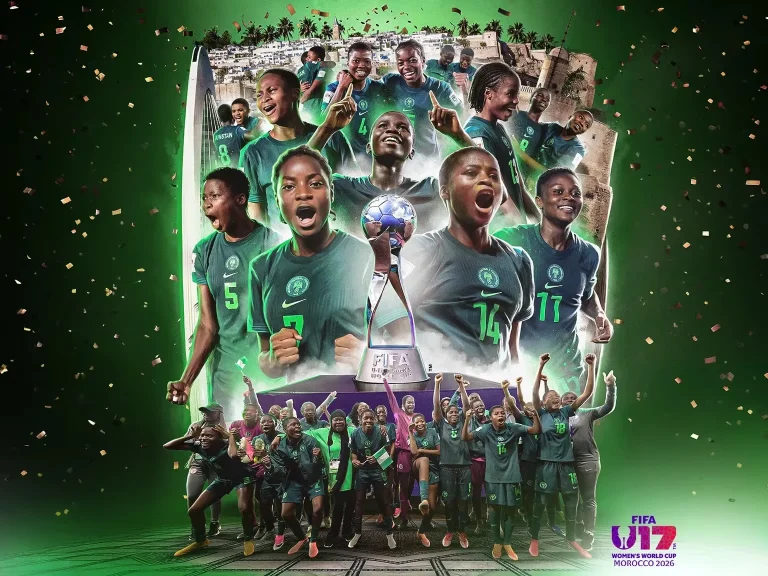
Former National Chairman of the Peoples Democratic Party, Uche Secondus, has joined world leaders and sports administrators in celebrating Nigeria’s U-17 women’s national team, the Flamingos, following their historic 2-1 victory over Japan in the final of the 2026 FIFA U-17 Women’s World Cup hosted in Morocco. The triumph marks a watershed moment for African football, as the Flamingos officially became the first-ever African nation to lift the prestigious global trophy at this youth level.
In a congratulatory message issued following the pulsating final whistle, Secondus described the victory as a landmark achievement that has brought immense pride, global honour, and renewed international respect to Nigeria and the African continent at large. The former opposition leader praised the young squad for displaying uncommon courage, tactical discipline, unwavering determination, and fierce patriotism throughout the tournament, especially in overcoming formidable traditional powerhouses to claim the ultimate prize.
A Hard-Fought Path to Global Glory
The journey of the Flamingos to the summit of world football in Morocco was far from straightforward, characterized by intense competition, high stakes, and remarkable psychological resilience. Their campaign began on a shaky note, sending waves of anxiety across the football-loving West African nation when they stumbled against Poland in their opening group fixture.
Rather than allowing the early setback to derail their ambitions, the young Nigerian side regrouped under the guidance of their technical crew. They engineered a remarkable tactical turnaround in subsequent group matches, showcasing superior stamina, clinical finishing, and fluid teamwork. Match by match, the Flamingos navigated the knockout stages with growing confidence, dismantling tactical challenges posed by world-class opponents and securing their historic berth in the grand finale against a tactically disciplined Japanese side.
In the summit clash held in Morocco, the Flamingos demonstrated nerves of steel. Goals from the sensational Awawu Bashiru and the prolific Oluebube Umejiaku propelled Nigeria to a well-earned 2-1 victory over Japan. The match cemented the players’ names in the annals of global sporting history, as they shattered the glass ceiling that had previously kept African teams from winning the FIFA U-17 Women’s World Cup since its inception.
Secondus Commends Team Resilience and NFF Efforts
Highlighting the psychological strength of the players, Secondus specifically noted how their ability to bounce back from an opening-match defeat to Poland exemplified true championship character. He emphasized that the victory was not merely a localized triumph for Nigerian football, but rather a powerful statement regarding the boundless potential inherent in Nigerian youth when they are provided with adequate encouragement, structured preparation, and timely opportunities.
Furthermore, the former PDP national chairman extended his commendation to the coaching crew, the backroom technical staff, and the leadership of the Nigeria Football Federation. He noted that their collective planning, administrative backing, and strategic execution played an instrumental role in shaping a cohesive squad capable of conquering the world on North African soil.
"The Flamingos have written their names in gold letters in the history books by becoming the first African nation to ever win the FIFA U-17 Women’s World Cup," Secondus stated, pointing out that the achievement is a testament to what is possible when preparation meets raw talent.
Call for Sustained Grassroots Sports Investment
Beyond the immediate celebrations and trophy presentations, Secondus used the historic occasion to advocate for systemic reforms in Nigeria’s sporting architecture. He strongly urged the Federal Government, corporate entities, state sports commissions, and other critical stakeholders to channel sustained investments into grassroots sports development across the country.
According to him, the extraordinary feat achieved by the Flamingos should serve as a wake-up call and a catalyst for greater financial and institutional support for youth talents in underserved communities. He argued that Nigeria possesses an endless reservoir of athletic talent, but unlocking this potential consistently requires robust academies, reliable infrastructure, competitive youth leagues, and transparent administrative frameworks.
"This victory should remind all of us that Nigeria’s future remains exceptionally bright, provided we nurture our talents and provide the right enabling environment for them to thrive," Secondus remarked. He further charged corporate organizations to partner with sports administrators to create pathways that transition elite youth athletes into professional senior careers without falling through the cracks.
Broader Implications for African Women’s Football
The triumph of the Flamingos in Morocco carries profound implications for the trajectory of women’s football across Africa. Historically, while African senior teams—most notably Nigeria’s Super Falcons—have dominated continental competitions and made notable marks at FIFA Women’s World Cups, global trophies at the junior cadet levels had remained elusive for the continent.
By breaking this jinx, the Nigerian teenagers have dismantled historical barriers, proving that African nations can successfully rival and defeat traditional football superpowers like Japan, the United States, Germany, and Spain on the global stage. Sports analysts predict that this milestone will trigger increased funding for women’s football federations across the continent, inspire a new generation of young girls to take up the sport professionally, and attract heightened media and commercial interest to youth tournaments.
Moreover, the stellar performances of standout individuals such as Awawu Bashiru and Oluebube Umejiaku are expected to spark intense interest from top-tier international talent scouts. Securing early exposure to elite European and American club academies will likely accelerate the development of these young athletes, ultimately strengthening the talent pipeline for the senior national team ahead of future Women’s World Cup cycles.
Looking Ahead: Preserving the Golden Generation
As the dust settles on the 2026 FIFA U-17 Women’s World Cup, sports administrators face the crucial task of preserving and developing this golden generation of players. Past football history is replete with instances of brilliant youth squads whose potentials were squandered due to poor transition planning, lack of educational and career support, and inadequate management at the senior level.
Stakeholders have echoed Secondus’s sentiments, emphasizing that the focus must immediately shift toward protecting these young athletes, shielding them from premature burnout, and providing them with continuous, high-level developmental opportunities.
In his concluding remarks, Secondus wished the players monumental success in their respective football careers, strongly urging them to remain focused, maintain strict discipline, and demonstrate an unwavering commitment to professional excellence. With the entire nation basking in the glory of their historic triumph, the Flamingos return home not just as world champions, but as pioneers who have forever transformed the landscape of Nigerian and African football.