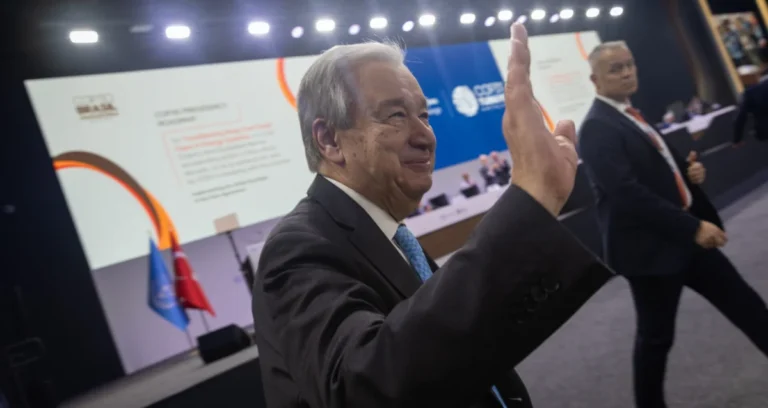
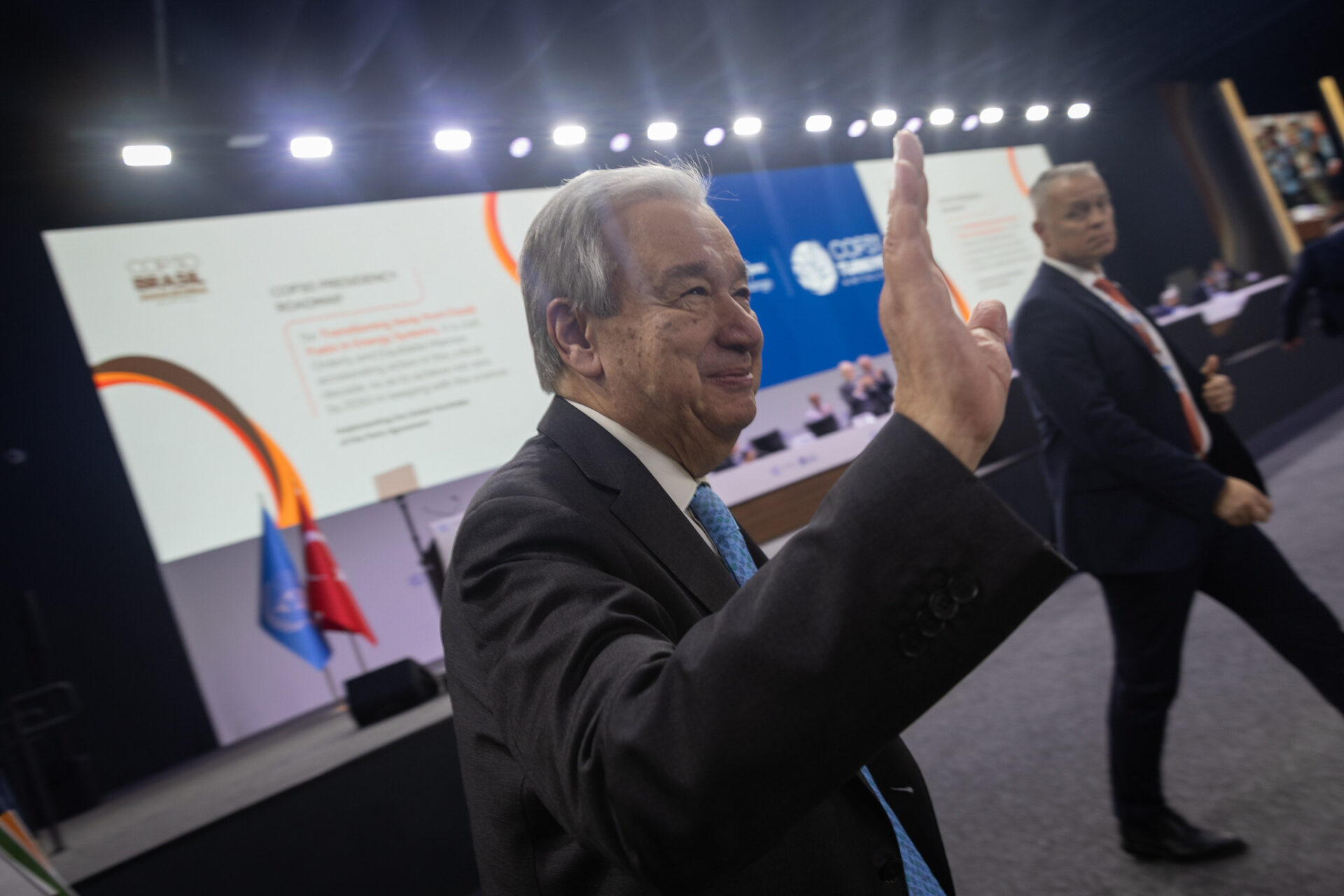
The global climate summit, COP31, entered its high-stakes political phase in Antalya, Turkey, against a backdrop of escalating environmental crises, fierce geopolitical friction, and the notable absence of several key world leaders. Delivering his final climate address as United Nations Secretary-General, António Guterres pulled no punches, launching a blistering critique of the fossil fuel industry and warning that the international community is careening toward "mutually assured destruction" as global temperatures steadily breach critical thresholds.
As more than 70 heads of state and government gathered in Antalya for a two-day high-level segment ahead of the conference’s scheduled conclusion on November 20, the fault lines defining modern international climate diplomacy were laid bare. Guterres condemned oil and gas majors for "making a killing while killing our planet," highlighting the stark financial disparity between corporate profits and climate disaster relief funds.
According to financial disclosures cited by the UN chief, the world’s nine largest oil and gas companies raked in a combined $95 billion in profit during the preceding quarter alone. In stark contrast, the loss and damage fund established at COP28 in Dubai in 2023 to assist vulnerable nations in recovering from climate-induced catastrophes has received approximately $600 million—an amount roughly equivalent to what those same nine fossil fuel giants earn in a mere 14 hours.

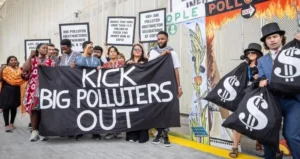
"The brutal truth is that the climate crisis is outrunning us," Guterres told delegates. "Fossil fuels must go the way of the dinosaurs. But that won’t happen on its own. The dinosaurs did not have a lobby. But fossil fuels do. Their strategy is simple: distort the science, delay the policy, delay the action, delay the accountability. It is time for governments to tax these windfall profits and use them to help vulnerable countries recover. Polluters must pay."
Marking the transition of COP31 from technical negotiations to high-level political bargaining, the summit has unfolded amid a global economic climate heavily burdened by inflation, ongoing international conflicts, and volatile energy markets. United Nations Climate Change Executive Secretary Simon Stiell underscored these compounding pressures, warning leaders that "chaos in global energy markets and climate disasters are supercharging inflation" and that the political costs of continued fossil fuel dependency are increasingly unforgiving.
The Absent Powers and Geopolitical Divisions
Despite the urgency voiced by vulnerable nations and international organizations, the halls of the Antalya summit bore witness to a glaring diplomatic vacuum. Heads of state from the world’s three largest emitting nations—China, India, and the United States—opted to skip the proceedings entirely.
Chinese President Xi Jinping and Indian Prime Minister Narendra Modi notably stayed away, alongside European leaders such as French President Emmanuel Macron and German leader Friedrich Merz. Meanwhile, the United States, the world’s second-largest emitter of greenhouse gases, dispatched no official delegation to the climate talks for the second consecutive year, reflecting shifting domestic political priorities in Washington. A White House spokesperson defended the absence by asserting that the international summit "rejects reality by failing to acknowledge that extremist climate policies are destroying countries around the world."
The absence of top-tier leadership from major industrialized and emerging economies drew sharp rebukes from civil society and representatives of climate-vulnerable states. Mohamed Adow, director of the Nairobi-based think tank Power Shift Africa, called it "a disgrace that only one G7 head of state and a handful of G20 leaders are attending the summit," emphasizing that the world’s largest economies bear a historical responsibility to lead the global response.
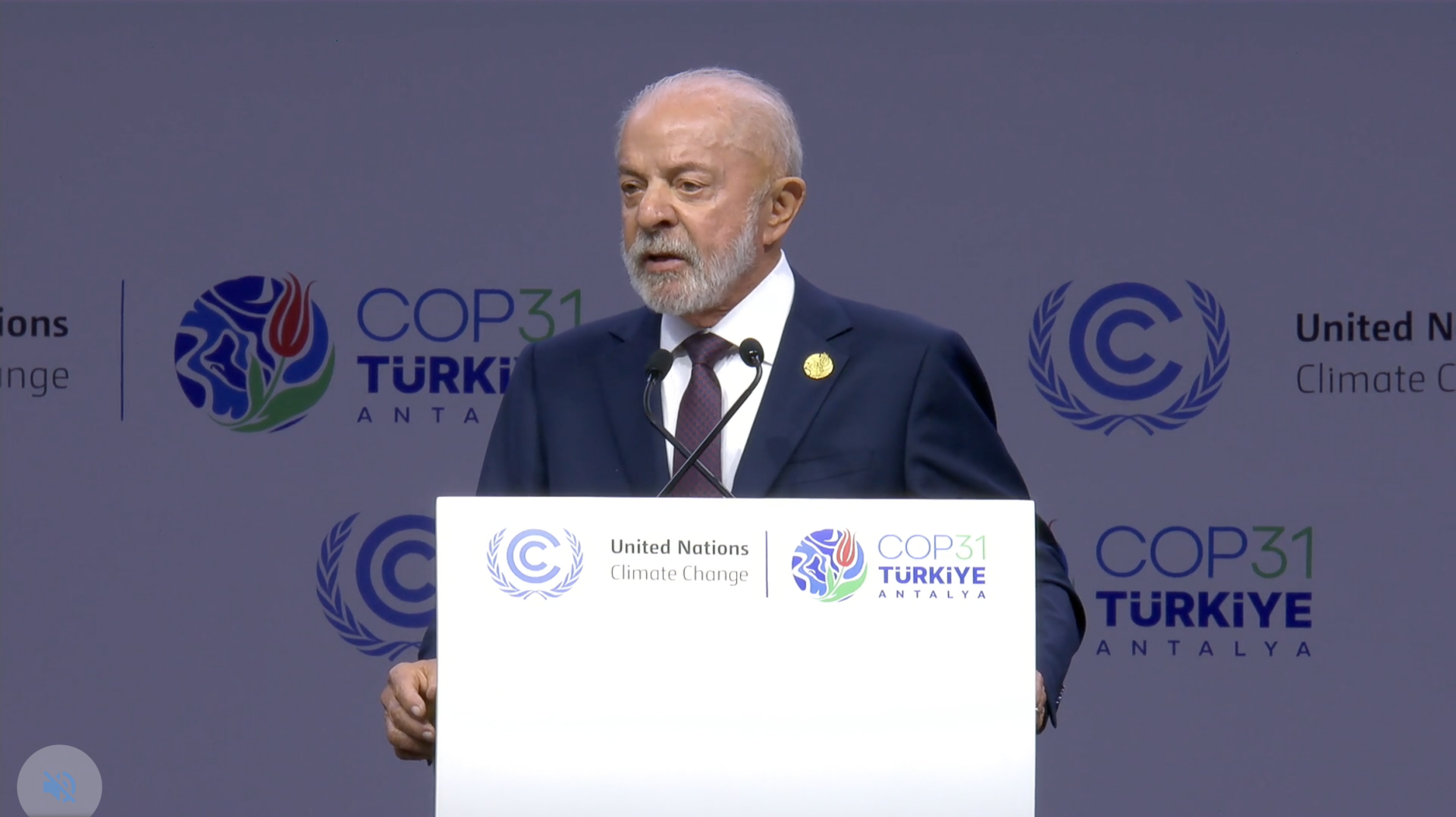
Brazilian President Luiz Inácio Lula da Silva echoed this sentiment, lamenting the erosion of climate urgency within premier multilateral forums. "This concern turned into silence," Lula said, reflecting on the marginalization of environmental survival at recent G7 and G20 meetings. "We started talking more about weapons and tariffs than the survival of future generations."
Science, the 1.5°C Overshoot, and Amplified Vulnerability
The political gridlock at COP31 unfolds against a backdrop of definitive scientific warnings that the foundational goal of the 2015 Paris Agreement—limiting global warming to 1.5°C above pre-industrial levels—is rapidly slipping out of reach.
Data released by the World Meteorological Organization (WMO) revealed that the global average temperature from January to September hovered at 1.47°C above pre-industrial levels. Compounding this trajectory, a strengthening El Niño cycle projected to peak late in the year threatens to drive temperatures even higher. WMO Secretary-General Celeste Saulo warned that current climatic shifts are giving "a new meaning to the phrase off the charts."
Ahead of the conference, the United Nations Environment Programme (UNEP) stated that an overshoot of the 1.5°C limit is now statistically inevitable, necessitating near-halving of global greenhouse gas emissions within the decade to restrain peak warming to 1.8°C. Addressing these grim projections, Guterres urged delegates against defeatism. "Science tells us an overshoot above 1.5°C is now inevitable," he acknowledged. "But science is not telling us to surrender. It’s telling us to fight harder. The truth is that we have the power to determine how high, how long, and how devastating that overshoot will be."
For frontline states, the reality of overshoot is already existential. Hilda Heine, President of the Marshall Islands—an island nation where atolls average just two meters above sea level—delivered a poignant warning to world leaders. Recounting a recent return to her home island, Heine described observing widespread coral bleaching across once-vibrant reefs, alongside rising seas eroding shores, schools, and hospitals. "The global response to overshoot must be overwhelming, or the world we know is over," she said. "Every new oil well drilled, every piece of coal extracted, is a threat to my country’s future. The discovery of new fossil fuel resources is not something to celebrate, but something to fear."
Friction also emerged over the timeline of scientific assessments. While the majority of nations support expediting the next comprehensive reports from the Intergovernmental Panel on Climate Change (IPCC) to inform the 2028 Global Stocktake, major fossil-fuel-producing states, including Saudi Arabia, Russia, and India, have mounted sustained resistance. Heine condemned these maneuvers, noting explicit efforts to undermine the IPCC and block its findings from shaping future international benchmarks.
The Trillion-Dollar Financial Hurdle
At the heart of negotiations between the Global North and the Global South remains the profound challenge of climate finance. Developing countries, many of which are simultaneously grappling with crippling sovereign debt burdens, argue that the structural architecture of international finance systematically prevents effective climate action.
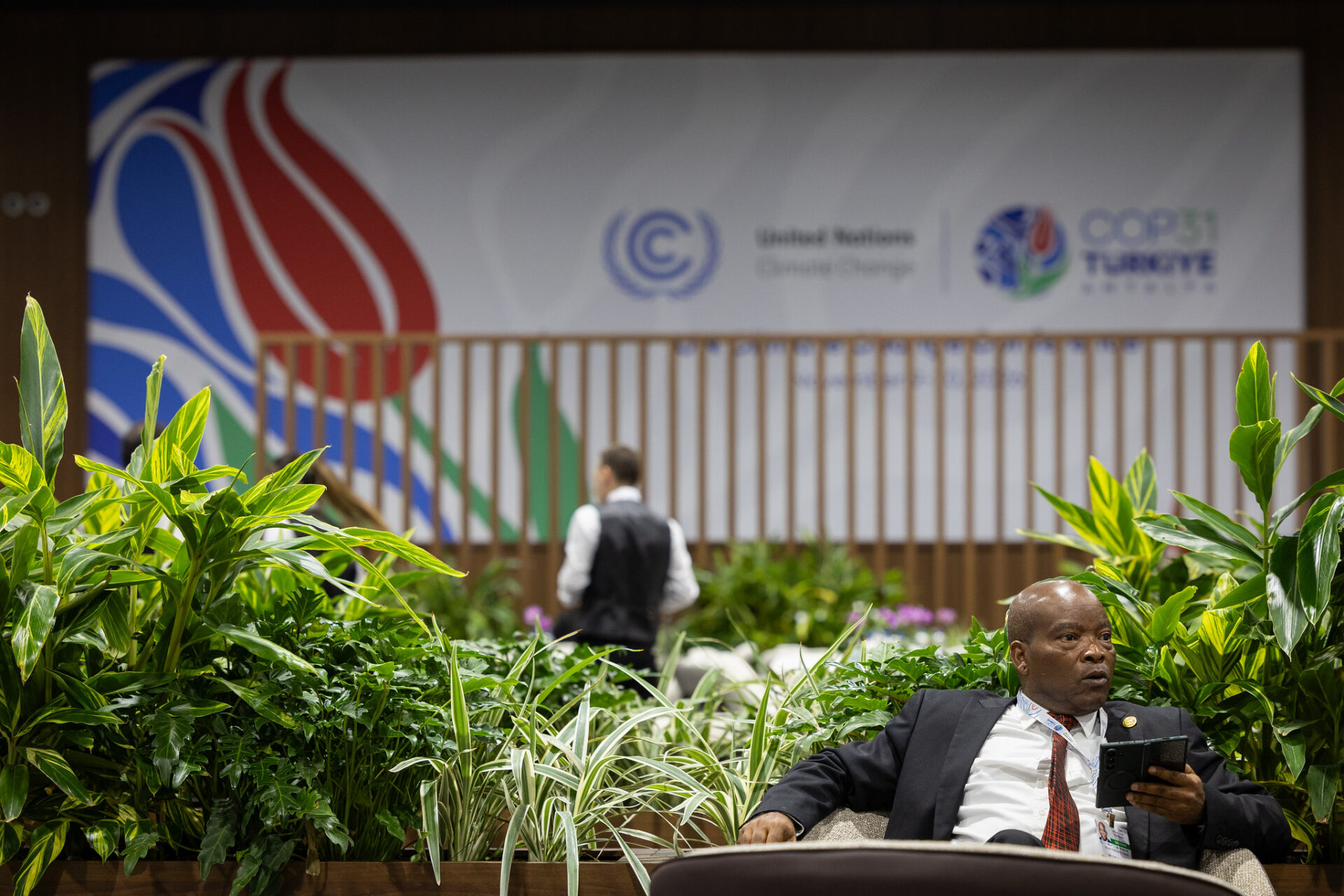
Prime Minister Abiy Ahmed of Ethiopia, whose nation is slated to host COP32 next year, highlighted the macro-financial squeeze facing emerging economies, noting that developing nations collectively pay nearly $1 trillion annually in public debt interest. Data from the United Nations Trade and Development agency (UNCTAD) projected that interest payments for developing countries would reach $995 billion, with approximately 3.7 billion people living in nations that spend more servicing public debt than on healthcare or education.
Australian Climate Change and Energy Minister Chris Bowen, who is guiding the COP31 negotiations, pointed out that a mere 0.2% of global climate finance currently reaches small island developing states for adaptation measures. Guterres reinforced this criticism, pointing out that emerging and developing economies—excluding China—account for nearly two-thirds of the global population yet receive less than one-fifth of international clean-energy investments.
The divide over financial commitments remains stark. Following the conclusion of COP29 in Baku, Azerbaijan, where developed nations pledged to mobilize $300 billion annually by 2035—falling significantly short of the $1.3 trillion demanded by developing nations—tensions persist over delivery mechanisms. According to Organisation for Economic Co-operation and Development (OECD) figures, developed countries provided and mobilized $136.7 billion in 2024. On the opening day of COP31, developing nations successfully fought for a dedicated agenda item to scrutinize whether wealthy nations are meeting their legal financial obligations, overcoming strong objections from the European Union.
Old Fault Lines: The Donor Debate and Fossil Expansion
The summit has also resurrected historic disagreements regarding historical responsibility and the definition of climate "donors." Under the 1992 United Nations Framework Convention on Climate Change (UNFCCC), financial obligations were formally assigned to a specific group of wealthy industrialized nations listed under Annex II, primarily OECD members and the EU.
Major emerging economies and high-income states such as China, Russia, and the Gulf monarchies—despite experiencing immense economic growth and wealth accumulation over the past three decades—remain outside the Annex II framework and maintain that their financial contributions are strictly voluntary.
This position was reiterated by Ruslan Edelgeriev, Russian President Vladimir Putin’s special representative for climate, who drew firm red lines ahead of the summit. "There are issues, if not ‘red lines,’ that we do not support," Edelgeriev stated in an interview with Russian media. "The first is the rapid abandonment of hydrocarbons. The second issue is that they are trying to force Russia to become a ‘donor’—we are not donors; this is purely voluntary."
Exhibits at the Russian pavilion in Antalya underscored a contrasting national outlook, showcasing the country’s nuclear-powered icebreaker fleet designed to exploit retreating Arctic sea ice and expand navigation along the Northern Sea Route, a development officially categorized in national policy as an economic opportunity.
Similarly, host nation Turkey faced scrutiny over domestic fossil fuel developments. Turkish President Recep Tayyip Erdoğan announced that the country’s Gabar region had expanded oil production to approximately 84,000 barrels per day across 184 wells, alongside the unveiling of new extraction fields. UNEP data indicated that Turkey’s greenhouse gas emissions rose by 24.4 million tonnes in 2025, marking the second-largest national increase globally behind the United States.
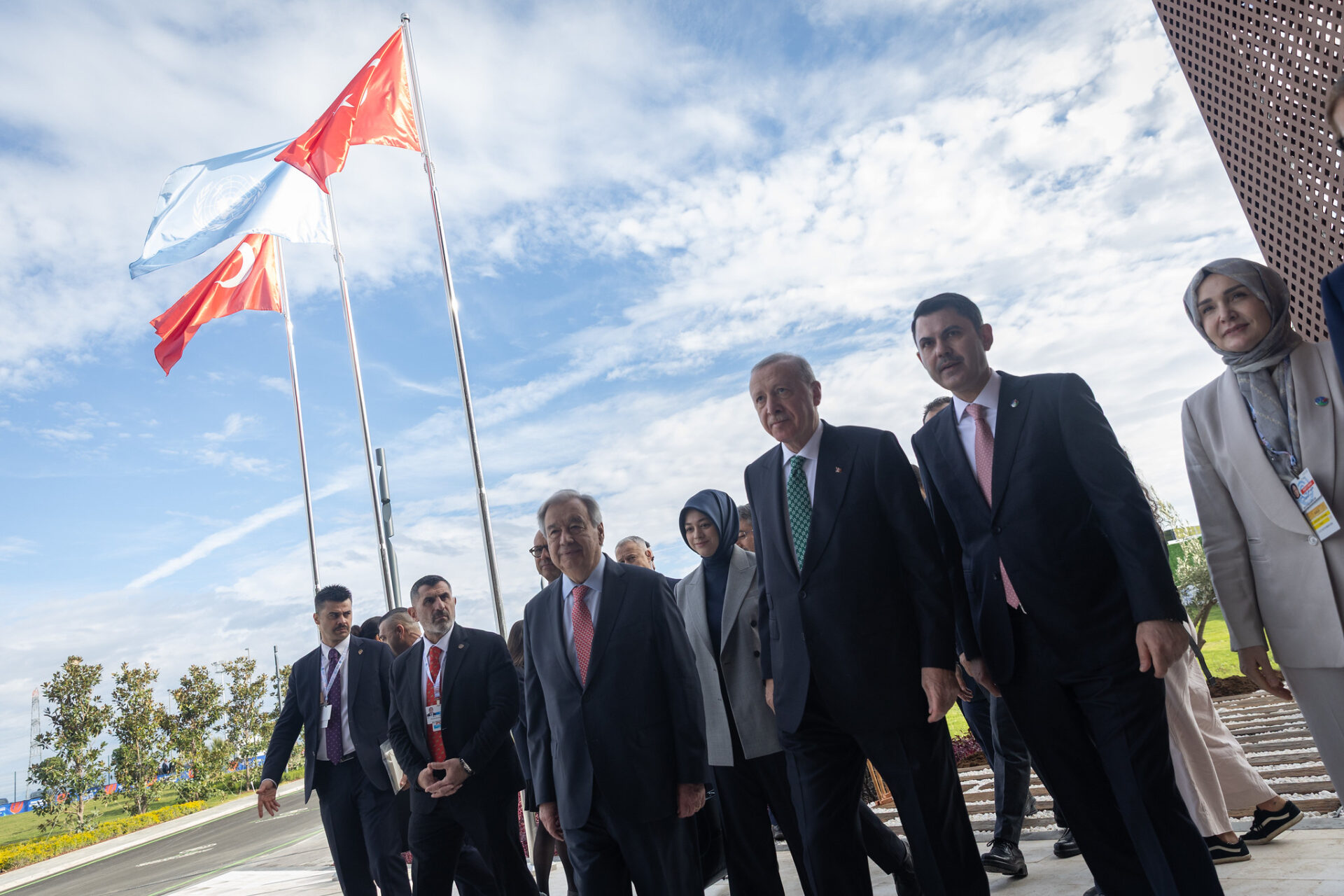
Despite these domestic trajectories, Erdoğan used his plenary address to emphasize ecological preservation—declaring that "unnecessarily cutting down a healthy tree is, in fact, equal to killing a person"—while simultaneously arguing that developed nations, having historically consumed the global carbon budget, must assume greater financial and reduction responsibilities.
As COP31 heads toward its final days, the path to consensus remains fraught. With Guterres preparing to step down as UN Secretary-General, his parting message served as both a stark warning and a call to arms for the international community. "Starting next year, I will no longer be Secretary-General," Guterres concluded. "But you can count on this. I will not stop telling the truth, and I will not stop fighting for it."