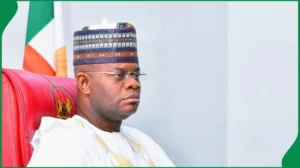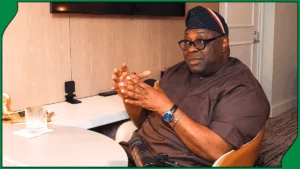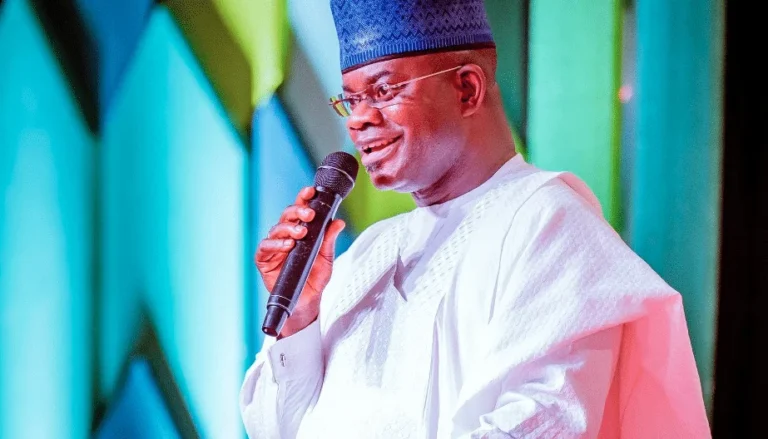
The long-standing political feud between the former Governor of Kogi State, Yahaya Bello, and former Senator Dino Melaye reached a new crescendo on Friday, November 20, 2026, when the former governor publicly dismissed his rival as a political entity suffering from terminal irrelevance. Speaking during an appearance on Channels Television’s "Politics Today," Bello characterized Melaye not as a substantive political adversary, but as a "noise-maker" whose influence in Kogi State has significantly waned following a series of electoral defeats.
This latest exchange marks another chapter in a rivalry that has spanned nearly a decade, often characterized by public vitriol, legal battles, and conflicting visions for the development of the North-Central state. As the political landscape in Nigeria shifts toward the next general election cycle, observers view this public spat as a strategic attempt by both men to consolidate their respective power bases.
The Anatomy of a Political Rivalry
The friction between Yahaya Bello and Dino Melaye is deeply rooted in the ideological and structural shifts within the All Progressives Congress (APC) and the People’s Democratic Party (PDP) in Kogi State. Since Bello’s inauguration as governor in 2016, Melaye, who represented Kogi West Senatorial District, emerged as one of the most vocal critics of the administration.
Their relationship, once cordial, disintegrated as Melaye utilized his platform in the National Assembly to challenge the policies of the state government, particularly regarding the payment of civil servant salaries and the execution of infrastructure projects. Bello, for his part, maintained that his administration was focused on institutional reform and infrastructural development, often framing Melaye’s criticisms as distractions designed to undermine governance for personal political gain.
Chronology of Conflict
The trajectory of their discord can be traced through several key milestones:
- 2016–2017: The honeymoon period ends as Melaye becomes a prominent voice against the Bello administration’s handling of the state’s wage bill, leading to a breakdown in communication between the Executive and the Senator.
- 2018: The failed recall process. An attempt was initiated by constituents in the Kogi West Senatorial District to recall Senator Melaye, a move many analysts believed was backed by state government machinery. The process ultimately failed to meet the constitutional threshold.
- 2019: The high-stakes senatorial election. Melaye faced a grueling contest to retain his seat, ultimately losing to Smart Adeyemi of the APC, an outcome that Bello and his supporters celebrated as a definitive rejection of Melaye’s brand of politics.
- 2023–2024: The governorship race. Melaye’s attempt to pivot from the legislature to the executive branch saw him clinch the PDP gubernatorial ticket. His defeat in the 2023 gubernatorial election, where he placed third behind the APC and the Social Democratic Party (SDP), provided the backdrop for Bello’s recent assertion that the people have moved on.
Evaluating the Performance Claims
During his television interview, Yahaya Bello challenged Melaye to identify a single landmark project he initiated during his tenure as a federal legislator. This highlights a recurring debate in Nigerian politics regarding the responsibilities of senators versus the oversight duties of the executive.
From a policy perspective, the "noise-maker" label applied by Bello touches upon a broader conversation about political communication in Nigeria. Bello argues that his tenure was defined by tangible outcomes, including road construction, healthcare facility upgrades, and security sector reforms. While supporters of the former governor point to the construction of the Reference Hospital in Okene and various bridge projects as proof of his legacy, his detractors—including Melaye—have often cited concerns over debt management and the state of local government autonomy as evidence of administrative failure.

Conversely, Melaye’s camp has historically maintained that his primary role as a legislator was oversight and advocacy. His supporters argue that he effectively utilized social media and public forums to highlight the plight of the common citizen, which they view as a necessary service in a state where dissent is often stifled.
Implications for Kogi State Politics
The continued hostility between these two figures suggests that the political future of Kogi State remains polarized. Analysts suggest that the influence of "big men" politics—where public discourse is dominated by personalities rather than policy manifestos—continues to hinder the evolution of local governance.
For the ruling party, the challenge lies in managing the optics of these internal and external skirmishes. As the APC seeks to maintain its hold on the North-Central region, the vitriol between high-profile members and their opponents can act as a double-edged sword. While it keeps the party in the news cycle, it also risks alienating a younger, more technocratic demographic of voters who are increasingly concerned with economic indicators such as inflation, unemployment, and the cost of living.
Data and Reality Check
In the context of Nigerian political accountability, the debate between Bello and Melaye mirrors a national struggle. According to the National Bureau of Statistics (NBS), Kogi State has faced significant challenges regarding internally generated revenue (IGR) and infrastructure maintenance. Bello’s focus on "fighting insecurity" was a central pillar of his campaign, yet the state has periodically seen reports of localized conflicts and kidnapping, which his administration consistently claimed were being managed through strategic investments in the "Kogi State Vigilante Service."
Melaye’s inability to secure electoral victory in recent cycles suggests that the electorate may indeed be shifting its preference. Whether this is due to the efficacy of the APC’s ground game or a genuine loss of appeal for Melaye’s populist style is a matter of ongoing debate. However, the data from the 2023 gubernatorial results indicates a fractured opposition, which has historically benefited the incumbent party.
Looking Ahead
The assertion by Yahaya Bello that "Kogi has moved on" is a bold claim that will be tested in the coming election cycles. In Nigerian politics, "irrelevance" is often a transient state. Political actors frequently reinvent themselves, moving from party to party or shifting their strategies to remain within the public consciousness.
For Dino Melaye, the path back to elective relevance requires a fundamental pivot. The current political climate favors candidates who can demonstrate a clear, actionable plan for economic development, rather than those who rely solely on rhetorical flair. Whether Melaye chooses to respond to these latest barbs with further digital engagement or a strategic retreat to retool his political machinery remains to be seen.
Ultimately, the people of Kogi State remain the primary stakeholders in this rivalry. As the two men continue their war of words, the fundamental issues—the state of the roads, the quality of public education, the stability of the power grid, and the fiscal health of the state—continue to be the metrics by which their legacies will be judged by history. The political theater in Abuja and Lokoja may provide entertainment for the news cycle, but for the average citizen in the state, the demand for concrete, measurable progress remains the only narrative that truly matters.