Luiz Inacio Lula da Silva delivered a sharp, uncompromising rebuke to Washington at the United Nations General Assembly in New York this Tuesday, asserting that Brazil is not a satellite state to any foreign power. While President Donald Trump was not present to hear the remarks in person, the message was unmistakable: Brazil’s diplomatic path will not be dictated by the White House. This declaration marks a significant escalation in the ongoing friction between the Brazilian administration and the current US executive, particularly regarding influence over South American domestic policy.
The diplomatic frostiness follows a period of heightened American interventionism in Brazilian affairs. Washington has repeatedly signaled its preference for the far-right opposition, specifically backing the political legacy of former President Jair Messias Bolsonaro. Tensions reached a flashpoint in July when the US administration imposed sanctions on a Brazilian judge, citing the magistrate’s role in sentencing Bolsonaro to 27 years in prison for his involvement in an attempted coup. Although Washington eventually rescinded those sanctions following direct, high-level negotiations with President Lula, the incident underscored the fragility of the current bilateral relationship.
A High-Stakes Electoral Horizon
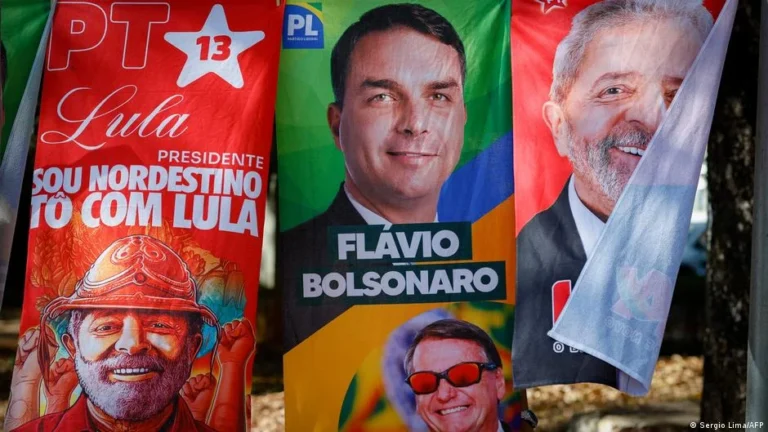
As the October 4 election approaches, the political landscape in South America’s largest democracy remains starkly polarized. Flavio Bolsonaro, the eldest son of the former president, has emerged as the primary challenger to Lula’s incumbent administration. Recent polling data suggests a dead-heat race, with both candidates polling within the margin of error for a potential runoff. The stakes extend far beyond Brasília; as the world’s fifth-largest nation, Brazil serves as an agricultural superpower and a repository of critical natural resources, including vast crude oil reserves, significant water resources, and an increasingly vital supply of rare earth elements that are essential for the global transition to green energy.
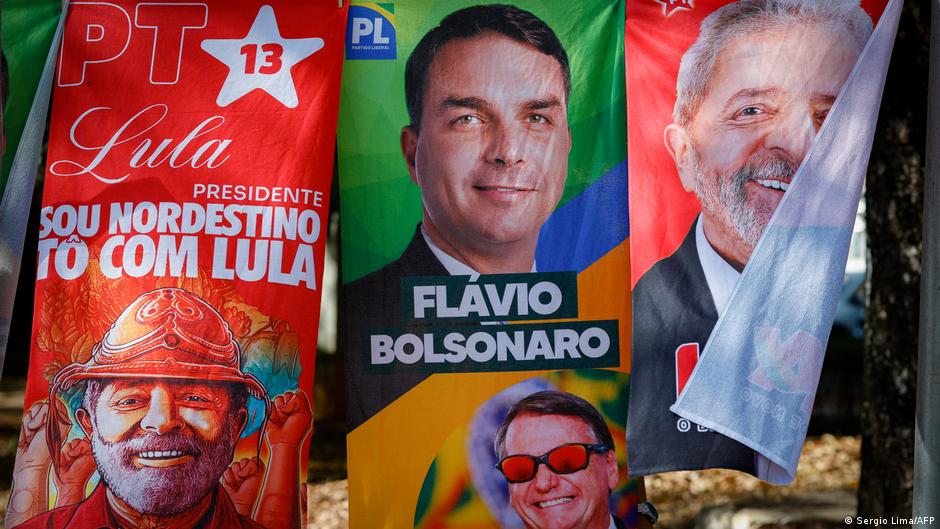
The election is being closely monitored by global markets and geopolitical analysts, as it represents a fundamental choice between two diverging foreign policy visions: Lula’s commitment to multilateralism and strategic autonomy, versus the Bolsonaro camp’s desire to pivot toward a restrictive, US-centric conservative alliance.
Chronology of Regional Realignment
The current geopolitical climate in Latin America has shifted rapidly since the beginning of the decade. A brief timeline of key developments illustrates the shrinking influence of the traditional left in the region:
- 2019–2023: Jair Bolsonaro’s presidency marked a period of deep alignment with the US, during which Brazil abandoned its "developing country" status at the WTO in a failed bid for OECD membership.
- January 2025: Venezuela’s political transition solidified, with the nation effectively becoming a US-aligned protectorate, further isolating the remaining leftist governments in the region.
- July 2026: The US imposes, and later lifts, sanctions against a Brazilian judge involved in the prosecution of Jair Bolsonaro.
- September 2026: President Lula delivers a firm speech at the UN General Assembly, emphasizing Brazilian sovereignty.
- October 4, 2026: Scheduled date for the Brazilian presidential election.
The Shield of the Americas and US Regional Strategy
Washington’s "Shield of the Americas" initiative has become a central point of contention. While framed as a cooperative security effort aimed at dismantling transnational cartels, many analysts in South America view it as a mechanism for the US to exert economic and military dominance. Following military interventions in Venezuela and mounting economic pressure on Mexico and Cuba, the Biden-Trump transition (and subsequent policy continuity) has focused on curbing Chinese influence within the Western Hemisphere.
Lula has consistently rejected this binary framework, advocating instead for a "dialogue with all" policy. China remains Brazil’s largest trading partner, a reality that makes total alignment with US-led anti-China initiatives economically prohibitive for the Brazilian state.

Comparative Analysis: Lula vs. Bolsonaro
Foreign policy has remained a secondary issue in the domestic campaign, largely overshadowed by economic concerns and social policy. However, the implications for Brazil’s international standing are profound. Rubens Ricupero, a former Brazilian diplomat, suggests that a victory for Flavio Bolsonaro would introduce significant volatility. "Lula has established a level of prestige in foreign policy that allows him to navigate between major powers," Ricupero noted. "Conversely, Flavio Bolsonaro is largely inexperienced, and his rhetoric suggests a return to the isolationist tendencies that defined his father’s administration."
Leonardo Paz of the Fundacao Getulio Vargas think tank offers a nuanced view. He argues that even under a Bolsonaro presidency, economic pragmatism might eventually supersede ideological rhetoric. "Javier Milei in Argentina provides a template," Paz observed. "He campaigned on anti-China rhetoric, but the economic dependence of the agricultural sector forced a rapid pivot to a more conciliatory tone once he took office."
The concern for international observers is not necessarily a sudden economic shift, but a collapse in Brazil’s diplomatic soft power. During the Jair Bolsonaro era, Brazil’s environmental policy—specifically the dismantling of Amazon protection protocols—led to a rupture in relations with the European Union. Although a trade agreement between Mercosur and the EU was signed earlier this year, observers fear that a change in leadership could lead to the abandonment of climate commitments, once again alienating European partners.
Economic Realities and the BRICS Question
A critical uncertainty in the upcoming election is the future of Brazil’s membership in BRICS. Flavio Bolsonaro has explicitly stated that he would review the country’s participation in the bloc, characterizing the alliance as a provocative entity aimed at the United States. He has also expressed skepticism toward China’s efforts to de-dollarize trade.

However, the agricultural sector, which forms the core of the Bolsonaro family’s base, is heavily reliant on Chinese demand. Any move to exit or undermine BRICS could trigger significant backlash from Brazil’s powerful soy and beef exporters. As Paz notes, "The unknown factor is the level of pressure Washington is willing to exert, and how much of that pressure the Brazilian government is prepared to absorb."
Brazil’s Role in the Global South
Despite its immense size and resources, experts emphasize that Brazil faces structural limitations. It lacks the financial capacity to act as a global donor and the military reach to intervene in international conflicts. Consequently, Brazil’s influence is primarily exercised through the "Global South" framework, where it has taken a lead role in redefining international governance, climate policy, and trading conditions for emerging economies.
Whether Brazil continues this role as a bridge-builder or reverts to a position of subordinate alignment with the US remains the central question of the election. For the international community, the October 4 poll is a bellwether for the future of multilateralism in an era of increasing great-power competition. If the current administration holds, Brazil is expected to continue its balancing act. If the opposition secures victory, the nation faces a period of potential instability as it attempts to reconcile its ideological commitments to Washington with the hard, inescapable economic realities of its global trade partnerships.
The upcoming weeks will likely see an intensification of rhetoric from both camps. For now, the world waits to see if Brazil will continue its trajectory as a key player in the Global South or pivot toward a new, more rigid alliance structure that could fundamentally redraw the geopolitical map of the Americas.