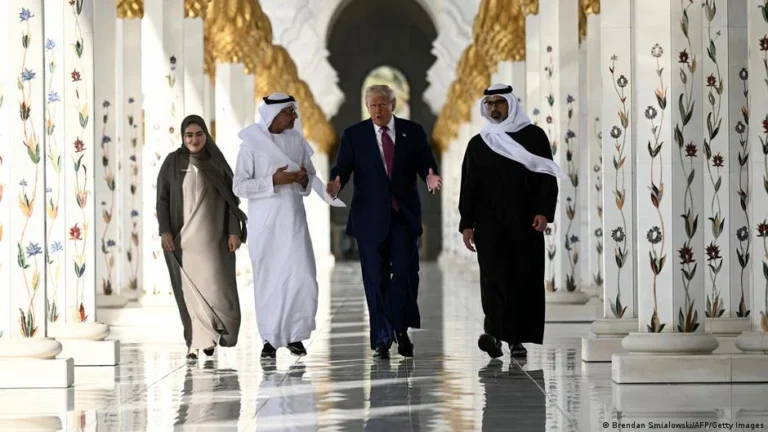
As the dust settles from the 2026 midterm elections, the American political landscape is bracing for a period of intense oversight. Voter sentiment, captured in a series of exit polls conducted throughout the cycle, identified systemic concerns regarding institutional integrity and the intersection of private business interests with the Trump administration’s foreign policy. With the Democratic Party poised to assume control of the House of Representatives in January, incoming leadership has signaled that investigating these alleged financial entanglements will be their highest priority. The focal point of this impending inquiry is the administration’s complex and lucrative relationship with wealthy Middle Eastern nations, a connection that critics argue has compromised the credibility of United States foreign policy.
The impetus for this investigation lies in a series of financial disclosures filed by the president earlier this year. These documents revealed that the Trump family’s business empire generated approximately $2 billion in income during 2025, a threefold increase from the previous fiscal year. Analysts and ethics watchdogs, including experts from the Middle East Institute, have highlighted that a significant portion of this growth is directly attributable to contributions from Gulf-based entities. According to available data, these foreign partners injected roughly $300 million into Trump-branded ventures in 2025 alone, prompting immediate questions about whether these financial inflows influenced executive decisions on sensitive regional issues.
A Chronology of Financial and Diplomatic Intersections
The trajectory of these concerns began to accelerate in 2024, when the Trump family, in partnership with Steve Witkoff—who currently serves as the president’s special envoy to the Middle East—launched the cryptocurrency venture World Liberty Financial. By early 2026, the company had attracted significant capital, including a major purchase by an investment firm linked to Sheikh Tahnoon bin Zayed Al Nahyan, the national security advisor to the United Arab Emirates and brother to the UAE’s president.
The timing of these transactions has drawn intense scrutiny. In January 2026, the secretive sale of a stake in the cryptocurrency firm occurred just weeks before the presidential inauguration. Only four months later, in May 2026, the administration authorized the sale of advanced artificial intelligence chips to the UAE. While the administration has consistently maintained that these two events are entirely unrelated, the proximity of the deal to the policy shift has provided the basis for a potential congressional subpoena. Critics argue that such instances illustrate a pattern where private financial gain appears to precede, or coincide with, significant diplomatic concessions.

The Real Estate Licensing Expansion
Beyond digital assets, the administration’s expansion into foreign real estate has become a primary target for congressional investigators. Throughout 2025, the president reported $59.5 million in income specifically from foreign real estate licensing—a staggering tenfold increase compared to 2023. Nearly two-thirds of this revenue originated from projects in the Gulf states, including luxury golf resorts, hotels, and skyscrapers in Saudi Arabia, Qatar, and the UAE.
Ethics watchdogs have long argued that these licensing agreements create an inherent conflict of interest. The central issue is that the developers involved in these projects are frequently linked to royal families or state-backed sovereign wealth funds—entities that simultaneously lobby the U.S. government for permits, economic partnerships, and favorable diplomatic outcomes. The inherent risk, according to legal scholars, is that the president’s personal financial portfolio is inextricably tied to the success of foreign governments that have a vested interest in shaping American policy to their benefit.
The Controversy Surrounding the Qatari Aircraft
A prominent symbol of these concerns is the May 2025 gift from the Qatari royal family: a custom-fitted, ultra-luxury jet valued at approximately $400 million. The acceptance of such a lavish asset from a foreign government immediately triggered a debate regarding the emoluments clause and the broader propriety of a sitting president receiving high-value gifts.
While the president has publicly expressed an intention to donate the aircraft to the Donald J. Trump Presidential Library Foundation—a non-profit organization that has already garnered over $100 million in donations—the logistics of this transfer remain opaque. Senator Elizabeth Warren and other members of the oversight committee have questioned the influence-peddling potential of the library’s funding mechanism. The concern is that the library is being utilized as a conduit for foreign governments and large corporations to gain access and favor, effectively turning philanthropic donations into a form of political currency.
Failed Diplomacy and the Board of Peace
The administration’s attempt to institutionalize its role in Middle Eastern stability through the "Board of Peace" has also come under fire. Established in September 2025 to manage ceasefire and reconstruction efforts in Gaza, the body was intended to function as a multilateral organization. However, the structure of the board—which grants the president indefinite status as chairman and requires a $1 billion entry fee for permanent membership—has led to widespread criticism.

Financial oversight of the board has been virtually non-existent. A report by the Financial Times revealed that the World Bank account originally designated for the board’s funds sat empty, while capital had been diverted to a private JP Morgan account. Experts like Zaha Hassan of the Carnegie Endowment for International Peace have noted that the legal restructuring of the board into an international non-governmental organization appears specifically designed to circumvent U.S. congressional oversight. With millions already contributed by Morocco and the UAE, the lack of transparency surrounding the $7 billion in pledges and $10 billion in personal funds promised by the president has made the board a top target for the upcoming legislative session.
The Role of Jared Kushner and Affinity Partners
As the House Oversight Committee prepares to convene in January, the activities of the president’s son-in-law, Jared Kushner, remain a focal point. Serving as a volunteer envoy, Kushner has been deeply involved in high-stakes negotiations regarding the Iran conflict and the reconstruction of Gaza. His dual role as an administration representative and the head of the private equity firm Affinity Partners has led to consistent allegations of using public office for private financial gain.
A recent investigative book by Matthew Cole, Princes and Thieves, has provided fresh fuel for these allegations. The text details how Kushner reportedly gained access to $2 billion in bank accounts while operating as a U.S. envoy, with the funds allegedly tied to UAE state interests. While Kushner has vehemently denied these claims and threatened litigation against publications that excerpted the book, the detail-oriented nature of the allegations has prompted calls from both sides of the aisle for an urgent and formal inquiry.
Implications for Future Governance
The looming investigations represent more than just a partisan effort to probe the previous administration; they reflect a growing institutional anxiety regarding the safeguards protecting the American executive branch. If the allegations of "pay-to-play" schemes involving Gulf nations are substantiated, it could lead to a permanent overhaul of the laws governing presidential financial disclosures and foreign lobbying.
The broader implication for U.S. foreign policy is equally significant. A government whose leadership is perceived to be financially beholden to foreign actors risks losing its influence as an honest broker in international conflicts. As the incoming Congress prepares its subpoenas, the core question will be whether the financial gains reported by the Trump family were the result of legitimate business acumen or the direct leveraging of the most powerful office in the world.

For the American public, these investigations will serve as a test of the checks and balances inherent in the U.S. Constitution. The coming months will likely see a clash between the executive’s desire for privacy and the legislature’s mandate for transparency. As the committee chairs finalize their list of witnesses and documents to be requested, the narrative of the "Trump crime family" is set to dominate the political discourse well into the next year.
Whether these inquiries will result in legal action or simply a shift in political norms remains to be seen. However, the sheer volume of financial data, the scale of the foreign contributions, and the public nature of the conflicts of interest suggest that the 2026 investigation into the Trump administration will be one of the most comprehensive and consequential oversight efforts in modern American history. The focus will remain on the intersection of personal enrichment and national interest, a theme that has defined the last two years and will undoubtedly define the first half of the new legislative term.