The race to lead the World Health Organization (WHO) is entering a critical phase as prospective candidates build their digital and diplomatic campaigns ahead of the formal nomination deadline. An analysis of early campaign metrics and nearly 7,500 direct digital interactions reveals stark geopolitical, institutional, and technical dividing lines among the contenders vying for the top post in global health.
With the official window for nominations closing on September 24, the contest has exposed distinct strategies for capturing key regional voting blocs, particularly within the WHO African region, while engaging established networks across the United States, the European Union, and international corporate sectors. While online engagement metrics—such as likes, comments, and shares—do not constitute formal state endorsements, mapping these interactions provides a vital window into the professional ecosystems, policy priorities, and diplomatic alignments surrounding the prospective candidates.

The early campaign landscape is currently defined by a head-to-head digital duel between Dr. Hans Henri Kluge, the WHO Regional Director for Europe, and Dr. Hanan H. Balkhy, the WHO Regional Director for the Eastern Mediterranean. This contest runs parallel to the high-profile candidacies of Indonesian Health Minister Budi Gunadi Sadikin and former Qatari Public Health Minister Dr. Hanan Mohammed Al-Kuwari.
Background Context and Election Timeline
The election for the next WHO Director-General comes at a time of unprecedented fiscal, operational, and institutional strain for the United Nations health agency. The successful candidate will inherit an organization navigating complex multilateral negotiations, demands for structural reform, and shifting geopolitical alliances following major donor realignments.

The electoral timeline is strictly regulated by the WHO Executive Board and the World Health Assembly. Following the close of the September nomination window, the candidate field is subjected to formal vetting and review. The WHO Executive Board will meet to interview candidates and draw up a shortlist of nominees, typically narrowing the field before the World Health Assembly votes to elect the new Director-General. This institutional transition requires contenders to build broad consensus across all six WHO regions, making early coalition-building and strategic outreach indispensable.
Contrasting Leadership Models: Technical Stewardship Versus Participative Diplomacy
The early campaign footprints of the leading contenders highlight fundamentally contrasting leadership models and campaign themes. Dr. Hanan Balkhy’s campaign strategy is anchored in a narrative of clinical frontline credibility, state-sovereign legitimacy, and scientific stewardship. Her announcement messaging has been characterized by authoritative tones and expressions of gratitude toward Saudi Arabia’s leadership, including King Salman and Crown Prince Mohammed bin Salman. Balkhy systematically links her extensive career as a pediatrician and infectious diseases specialist to her hands-on management of the MERS-CoV crisis and the establishment of Saudi Arabia’s national infection control authorities.
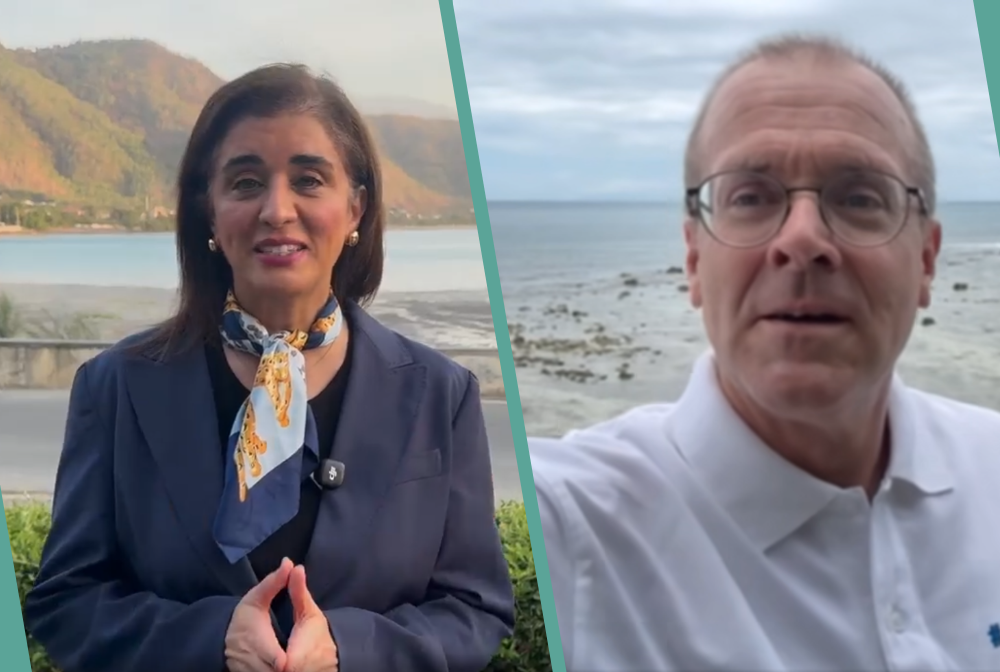
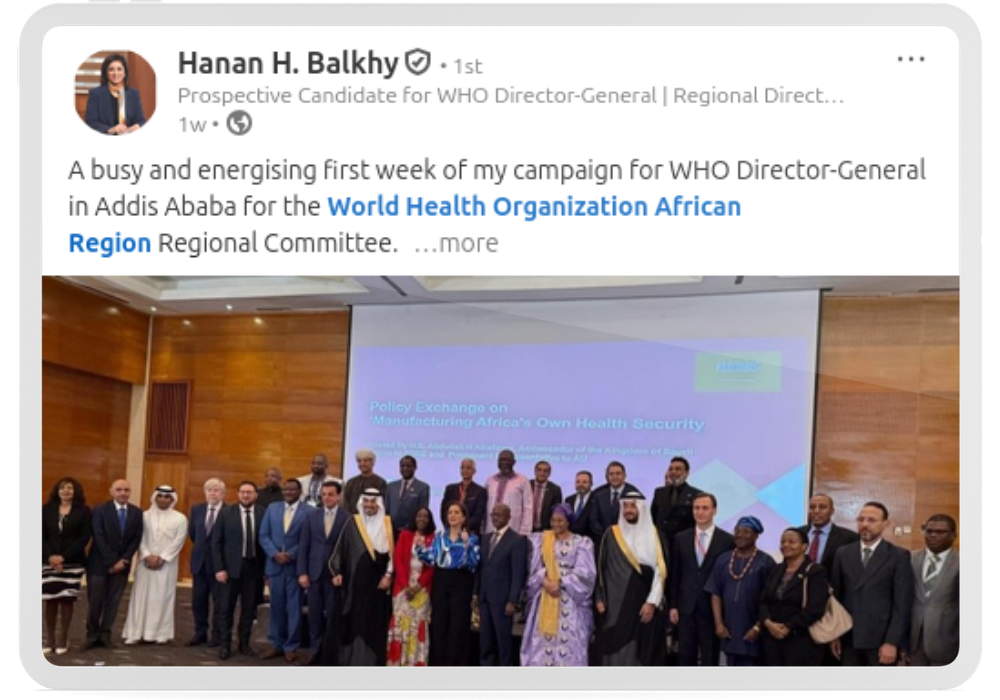
This core narrative has resonated strongly with regional colleagues, who view her candidacy as a historic milestone for women in global health leadership. During subsequent engagements at regional committee meetings in Addis Ababa and Timor-Leste, Balkhy expanded this clinical foundation into a broader platform centered on mutual capacity building, "One Health" collaborations, and strengthening local manufacturing and regulatory infrastructure.
In contrast, Dr. Hans Kluge’s campaign relies on bottom-up messaging focused on administrative transparency, participative dialogue, and field-tested operational crisis management. His tone is inclusive, marked by active listening and deference to member states—a strategy deliberately crafted to mitigate potential resistance to a European candidacy. Kluge’s professional background spans decades of crisis intervention in complex conflict zones and fragile settings, including Somalia, Liberia, Siberia, Myanmar, and the Central African Republic.
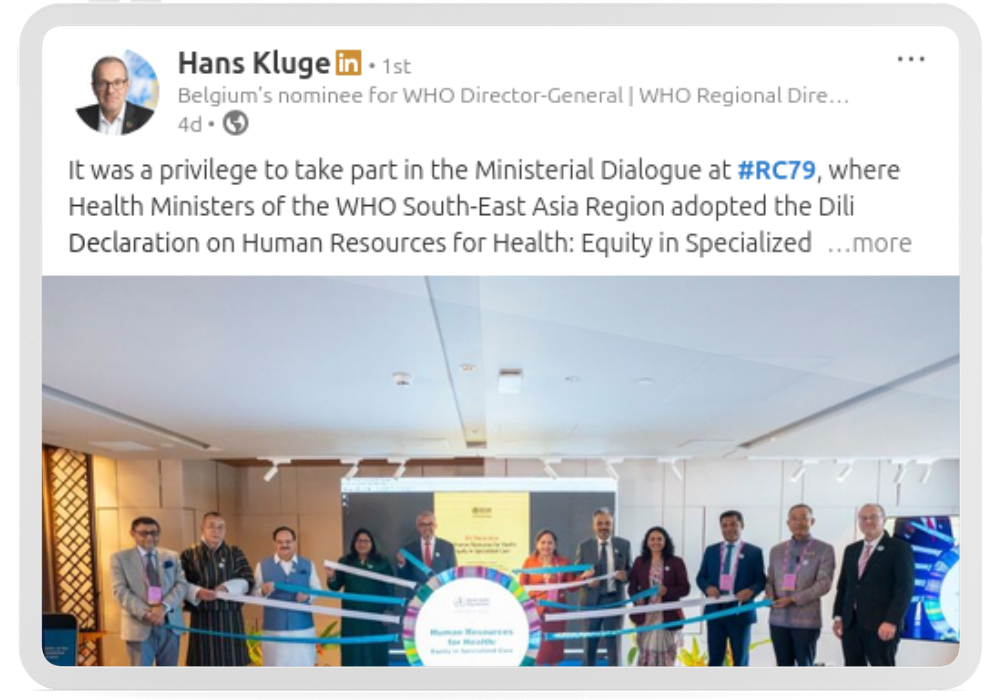
Formalizing this platform through his official manifesto, “Rebuilding WHO Together,” Kluge emphasizes structural institutional reform, sustainable financing, and a networked “One WHO” approach. His campaign tours across Africa and participation in multilateral declarations on health workforce equity underscore his commitment to placing local health workers and primary healthcare at the center of universal health coverage.
Geopolitical Bases and Sovereign Alignments
Translating these overarching narratives into tangible electoral momentum requires robust state-level alignment. A granular analysis of digital interactions demonstrates how each candidate’s sovereign network mirrors the distinct political architecture of their nominating regions.
Dr. Kluge’s platform is supported by continuous, repeat engagement from key European officials, led by the Belgian diplomatic corps and cabinet-level figures such as Latvian Health Minister Hosam Abu Meri, Monegasque Minister Christophe Robino, Irish Minister of State Mary Butler, and Swedish Global Health Ambassador Karin Tegmark Wisell.
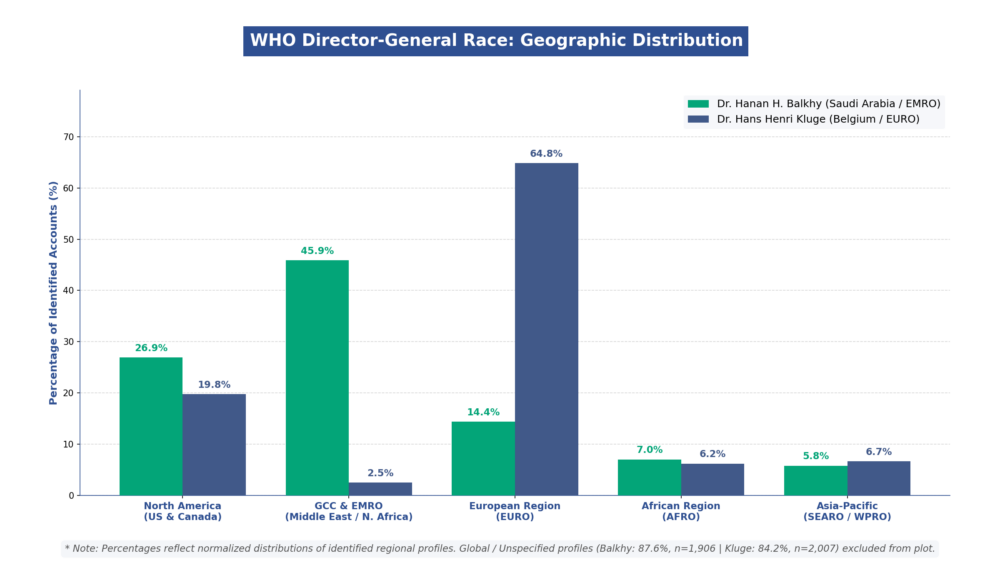
Conversely, Dr. Balkhy commands a highly consolidated sovereign-technical base anchored by senior leadership within the Saudi Ministry of Health and the Saudi Food and Drug Authority (SFDA). This base is amplified across the Eastern Mediterranean region through steady engagement from health ministry officials in Egypt, Oman, and Sudan, creating a cohesive regional network.
Contesting the Pivotal African Regional Vote
A decisive battleground in any WHO Director-General election is the African region (AFRO), which represents 47 sovereign member states. Because the African bloc frequently coordinates its diplomatic positions, securing traction within AFRO is essential for any viable candidate.
During the regional committee meetings in late August, both Kluge and Balkhy actively courted African health leaders. Kluge’s collaborative model drew digital engagement from representatives of the Africa Centers for Disease Control and Prevention (Africa CDC), the West African Health Organization (WAHO), and regional technical experts. Meanwhile, Balkhy’s outreach to the continent generated immediate momentum among operational and institutional figures, including leaders from the Institut Pasteur de Dakar, UNICEF, the International Planned Parenthood Federation (IPPF), and various national public health institutes.
Geopolitical Ties: Washington Biosecurity and EU Executive Machinery
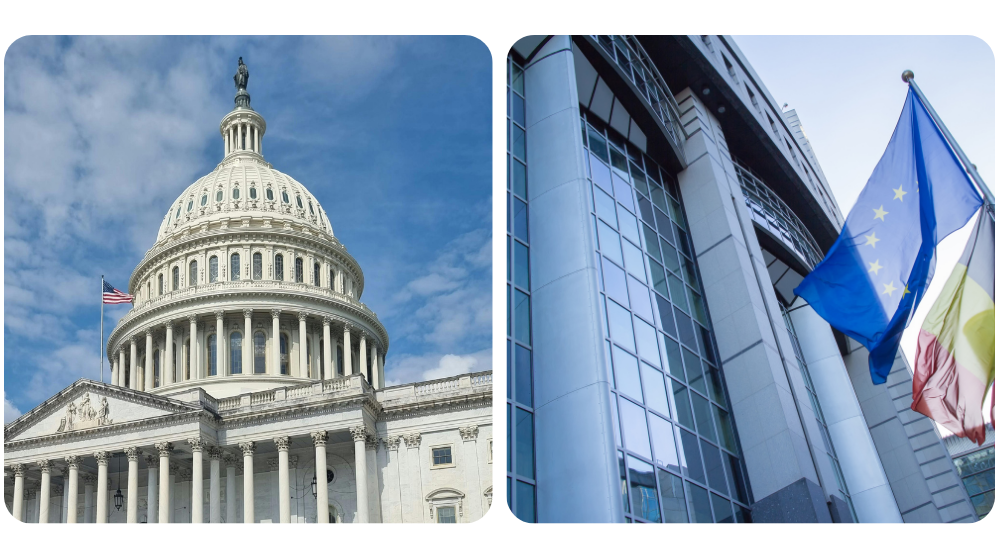
Beyond regional voting blocs, the candidates maintain distinct ties to key global policy and security hubs. Balkhy’s digital network extends into United States biosecurity and public health circles, featuring regular interactions with former presidential advisers, biosecurity experts, and senior officials from the U.S. Centers for Disease Control and Prevention (CDC) and the Department of Health and Human Services (HHS). Analysts note that these connections could position her as a vital diplomatic bridge for Washington.
Kluge maintains deep administrative ties within the European Union’s executive machinery. His digital interactions consistently feature senior officials from the European Commission’s Directorate-General for Health and Food Safety (DG SANTE), the European Health Emergency Preparedness and Response Authority (DG HERA), and the European Health and Digital Executive Agency (HaDEA). These connections integrate his campaign directly into the regulatory and health security apparatus of the European Union.
Economic and Academic Networks: Big Pharma Versus Biotech R&D
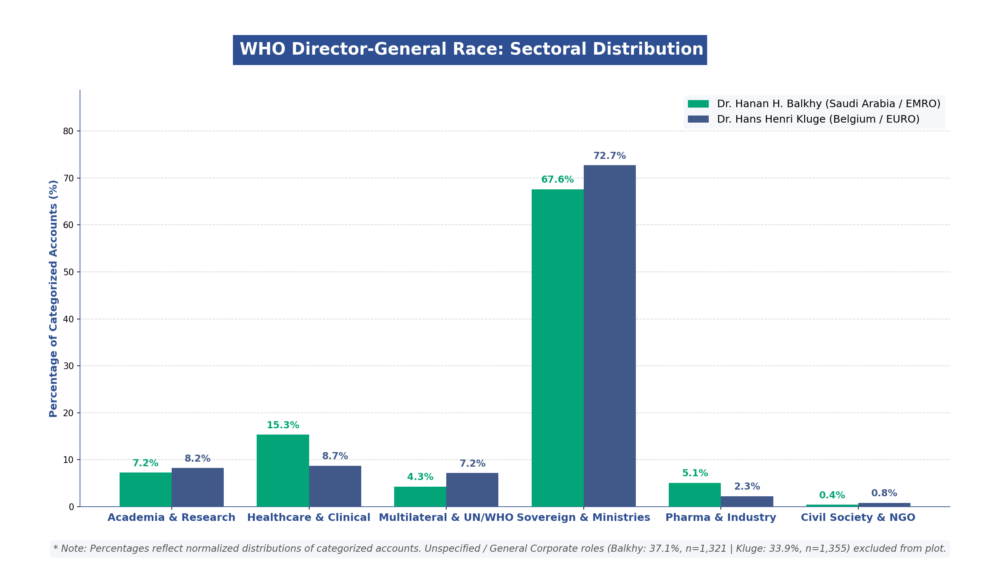
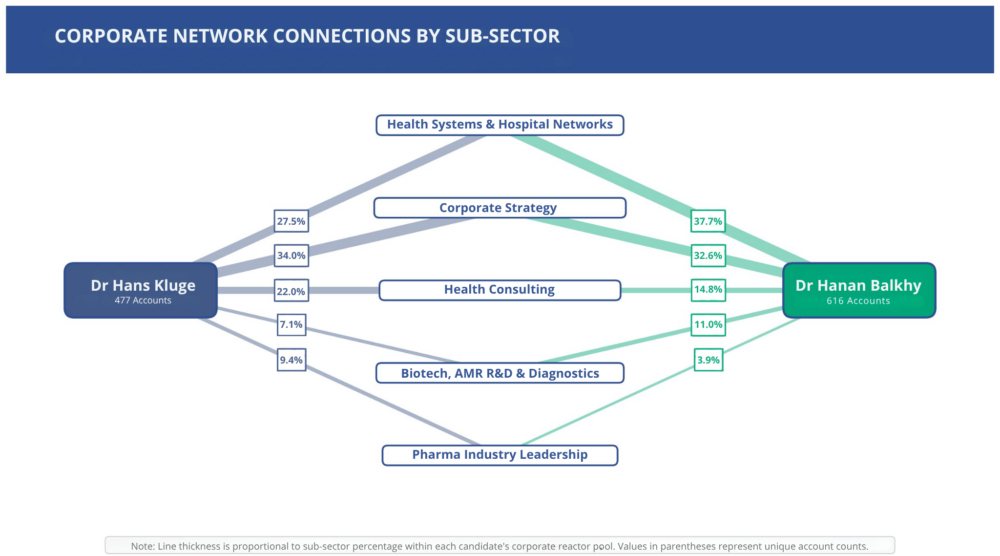
The candidates’ digital ecosystems also reveal distinct economic and academic alignments. Kluge’s corporate footprint is concentrated within the established European industrial healthcare sector, drawing engagement from top-level executives at Bayer, the European Federation of Pharmaceutical Industries and Associations (EFPIA), Vaccines Europe, and other multinational pharmaceutical enterprises.
In contrast, Balkhy’s economic network is oriented toward specialized research and development, clinical transformation, and antimicrobial resistance (AMR) innovation. Her platform engages leaders from specialized biotech firms, global infectious disease divisions, and national hospital systems.
Academically, Kluge draws heavily from health economics and policy architects at institutions such as the London School of Economics and Bocconi University, alongside civil society and patient advocacy groups. Balkhy mobilizes a coalition of clinical researchers, epidemiologists, and AMR survivors, reflecting her background in infectious disease management.
Implications for the Future of Global Health
As the nomination deadline approaches, the divergence between the digital campaigns of Dr. Balkhy and Dr. Kluge underscores fundamental questions about the future leadership of the World Health Organization. While other contenders—such as Indonesia’s Budi Gunadi Sadikin, who commands a massive domestic following and commands attention from financial strategists, and Qatar’s Dr. Hanan Mohammed Al-Kuwari—pursue alternative visibility strategies, the early data highlights the complex interplay of digital influence, sovereign trust, and institutional networks.
Ultimately, the candidate who succeeds in converting digital engagement and professional networking into real-world diplomatic trust will be best equipped to guide the WHO through its upcoming era of transformation, financial stabilization, and global health security challenges.