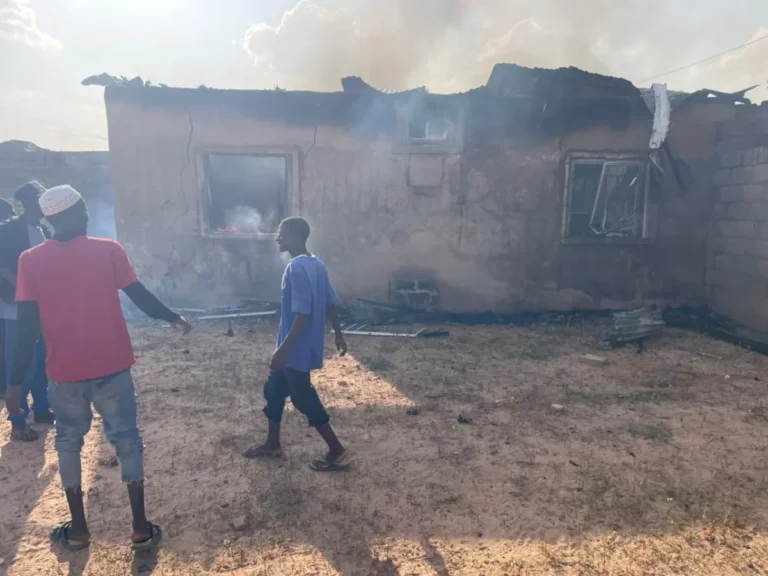
Rapid intervention by the Federal Fire Service, Gombe State Command, successfully averted a catastrophic disaster on Monday afternoon after a residential building within the bustling Hashidu Estate caught fire. Thanks to a swift response time and disciplined operational execution, firefighters managed to contain the blaze, preventing it from consuming the entire neighborhood while saving physical assets valued at approximately ₦20 million.
The incident, which has reignited conversations regarding domestic electrical safety in urban residential areas across northern Nigeria, highlights both the growing efficiency of regional emergency services and the persistent vulnerabilities tied to residential electrical infrastructure. While the flames caused an estimated ₦15 million in property damage, the proactive containment measures kept total destruction at bay, ensuring that no human lives were lost or injuries sustained during the ordeal.
Chronology of the Incident
The emergency response followed a tightly compressed timeline that underscores the readiness of the Gombe State fire operations units. According to official records released by the command, the sequence of events unfolded rapidly on Monday afternoon:
At precisely 4:38 PM, the control room of the Federal Fire Service Gombe State Command received a frantic distress call alerting operators to billowing smoke and flames erupting from a residential property in Hashidu Estate.
Demonstrating high operational readiness, firefighters stationed at the ATM Fire Operations Base were mobilized a mere two minutes after the distress signal was logged.
Navigating afternoon traffic, the primary firefighting unit—commanded by DSF Ali Kidams—arrived at the scene at 4:45 PM, just seven minutes after the initial emergency call was placed.
Upon arrival, the crew deployed a multipurpose water tender, utilizing a medium water jet technique to aggressively combat the advancing flames and establish a defensive perimeter around adjacent properties.
Recognizing the potential for the fire to spread due to close housing proximity within the estate, a secondary backup crew from the Mega Park Fire Station was dispatched to provide auxiliary support and water supply reinforcement.
By 5:50 PM, after extensive cooling-down operations, a comprehensive follow-up inspection confirmed that the fire had been completely extinguished, with zero lingering embers or risks of reignition. The personnel and equipment safely returned to base shortly thereafter.
Preliminary Findings and Damage Assessment
An initial on-site investigation conducted by fire safety inspectors pointed toward a common domestic hazard as the probable trigger for the disaster. Preliminary assessments indicate that the blaze was ignited by an electrical fault within the residential building. Modern homes are increasingly reliant on heavy-duty electronic appliances, cooling systems, and entertainment units, all of which place immense strain on domestic wiring networks if not properly installed or monitored.
While the prompt deployment of the medium water jet prevented total structural collapse, the financial toll remains significant. The fire managed to sweep through sections of the home, destroying personal effects, furniture, and structural components valued at approximately ₦15 million. Nevertheless, the professional intervention of the Federal Fire Service safeguarded adjacent rooms, structural foundations, and neighboring homes, preserving assets valued at an estimated ₦20 million.
Crucially, the prompt evacuation of occupants and the swift arrival of emergency responders ensured a zero-casualty rate. Emergency medical personnel on standby confirmed that no residents or firefighters required hospitalization for burns, smoke inhalation, or trauma.
Official Statements and Safety Directives
Following the successful operation, the Public Relations Officer of the Gombe State Command, ASF MB Muazu, released an official statement detailing the operation and offering critical safety advice to homeowners and estate residents.
"Preliminary assessment indicates that the fire was suspected to have been caused by an electrical fault. Although property estimated at ₦15 million was lost, the prompt response and effective intervention of our firefighters helped save property valued at approximately ₦20 million," Muazu stated.
Highlighting the preventable nature of many domestic fires, the command issued a comprehensive advisory urging residents to adopt rigorous electrical safety protocols to protect their lives and investments. The safety guidelines emphasize the following preventive measures:
Avoid Overloading Sockets: Residents must refrain from plugging multiple high-capacity appliances into a single power strip or wall socket, as this causes overheating and insulation breakdown.
Use Standard Electrical Appliances: Homeowners should exclusively purchase certified, high-quality electrical gadgets and cables that comply with national safety standards, avoiding substandard imported alternatives.
Engage Qualified Professionals: All electrical installations, wiring upgrades, and major repairs must be handled exclusively by certified and experienced electricians rather than unqualified handymen.
De-energize When Not in Use: Appliances, irons, immersion heaters, and electronics should be completely switched off and unplugged from wall sockets when leaving the house or going to bed.
Immediate Emergency Reporting: In the event of a spark, burning odor, or smoke, residents must immediately contact emergency response agencies to ensure timely intervention before minor issues escalate into major disasters.
Broader Impact and Implications for Urban Safety
The Hashidu Estate incident serves as a microcosm of broader fire safety challenges confronting urban and semi-urban centers across Nigeria. As cities expand and housing estates proliferate, the demand for stable electrical power often outpaces the capacity of existing infrastructure. Coupled with fluctuations in power supply and the widespread use of alternative power sources such as generators and inverters, residential buildings face heightened risks of electrical surges and subsequent fires.
Experts in urban planning and disaster management note that incidents of this nature validate the ongoing investments by federal and state governments in decentralizing fire services. Establishing localized operational bases—such as the ATM Fire Operations Base and the Mega Park Fire Station—allows emergency services to drastically reduce response times, transforming what could have been a widespread neighborhood tragedy into a contained, manageable local incident.
Furthermore, the successful outcome in Gombe underscores the critical importance of community vigilance. The ability of residents to recognize danger quickly, place an immediate distress call, and clear access paths for incoming fire tenders remains a decisive factor in emergency response outcomes.
As the Gombe State Command resumes normal watch duties following the Hashidu Estate operation, authorities continue to advocate for public awareness campaigns, routine safety audits of residential buildings, and the integration of basic fire prevention education in community associations and housing estate management bodies.