The life of Sofia Rosenfeld, a distinguished Russian-Israeli ornithologist renowned for her pioneering research into migratory Arctic birds, has been abruptly redirected from the remote tundras of the North to the confines of a penal colony. On October 7, a Moscow court sentenced the scientist to three and a half years in prison, marking a grim escalation in the Russian judicial system’s pursuit of individuals who donated to the Anti-Corruption Foundation (FBK), an organization founded by the late opposition leader Alexei Navalny.
For her father, Boris Rosenfeld, who resides in Israel, the verdict is a devastating rupture. Leafing through a photo album that documents their last meeting, he struggles to reconcile the image of a dedicated scientist who spent her life studying the delicate migration patterns of geese with the reality of her current incarceration. "This was the last time we saw her," he says, his voice trembling. "Then she left for Moscow, and this whole case began."
A Scientific Career Defined by Dedication
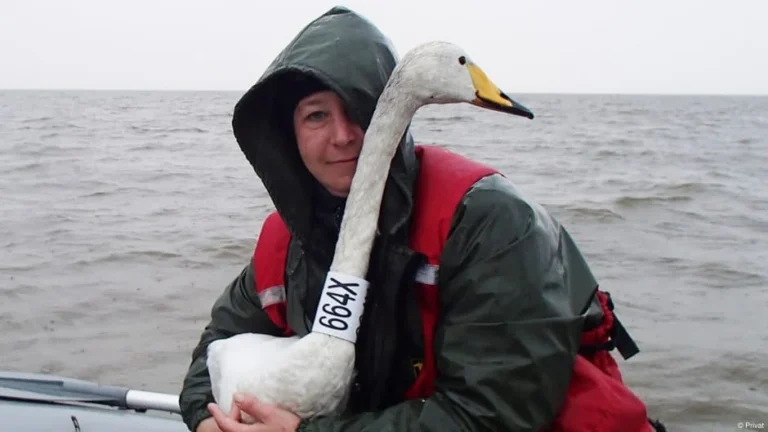
Sofia Rosenfeld’s trajectory was never one of political agitation, but rather one of profound commitment to the natural world. A biologist by training and a graduate of Moscow State University, she gained international acclaim for her systematic approach to monitoring migratory bird populations. Her colleagues describe her as an individual whose life was defined by the Arctic and its avian inhabitants.
Her contribution to science was not merely theoretical. She famously developed a specialized aircraft to shadow migratory flocks at low altitudes, a unique method that allowed for unprecedented observational data. Her research provided critical insights into the fragile ecosystems of Siberia and the Arctic, earning her the respect of the international scientific community. Helmut Kruckenberg, head of the German Institute for Wetlands and Waterbird Research (IWWR), underscored the gravity of her professional loss, noting that her work in nature conservation and the protection of Siberian and Arctic species is globally significant. "What is happening to her is simply beyond comprehension for us," Kruckenberg remarked.
The Anatomy of a Criminal Case
The charges against Rosenfeld stem from a series of donations totaling 2,000 rubles—roughly $30—made to the Anti-Corruption Foundation. In June 2021, a Moscow court labeled the FBK an "extremist organization," a designation that effectively criminalized any financial support given to the foundation, even retroactively.
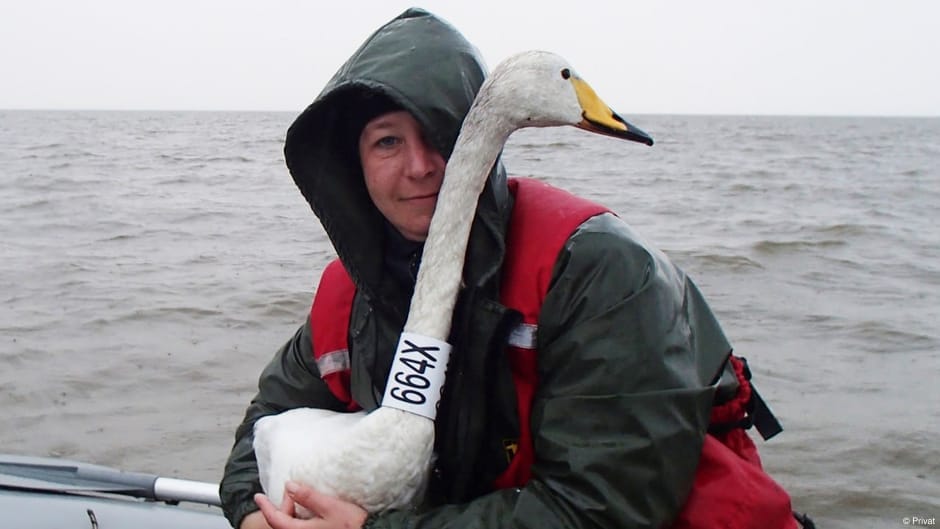
At the time the foundation was blacklisted, Rosenfeld was on a remote Arctic expedition, far removed from the reach of the internet or the cycle of domestic news. According to those close to her, she did not immediately become aware of the legal status change and only ceased her recurring donations upon her return to Moscow. This inadvertent oversight became the foundation for a criminal case that has now spanned over a year.
The case of Rosenfeld is not an isolated incident. Independent monitoring groups, including the human rights project Mediazona, have documented at least 225 similar cases across Russia involving citizens prosecuted for donations to the FBK. While the vast majority of these cases—approximately 85%—resulted in non-custodial sentences, such as fines or community service, Rosenfeld received a punitive term of three and a half years in a penal colony, despite prosecutors requesting five years.
Chronology of the Legal Struggle
The legal pressure on Rosenfeld began to mount shortly after she successfully defended her doctoral dissertation in October 2025. The events that followed represent a systematic dismantling of her professional and personal life:
- Mid-2021: The Russian authorities designate the FBK as an extremist organization. Rosenfeld, currently in the field, remains unaware of the shift.
- Late 2025: Following the completion of her doctorate, authorities search her residence. Travel restrictions are imposed, preventing her from leaving Moscow.
- Summer 2026: For the first time in her career, she is forced to cancel her annual summer expedition to the Arctic, an event that served as the heartbeat of her professional existence.
- October 7, 2026: A Moscow court finds her guilty of financing extremism and sentences her to three and a half years in a penal colony.
Throughout the duration of the court hearings, Rosenfeld’s focus remained remarkably steadfast on her work. Even on the day of her sentencing, her conversations with colleagues were dominated by strategies to continue her research in her absence, reflecting an optimism that the judicial system would recognize the lack of political intent in her actions.
The Broader Implications for Russian Academia
The imprisonment of a high-profile scientist like Rosenfeld carries profound implications for the Russian scientific community. Her case serves as a stark reminder that even those who remain detached from political activism are not immune to the broadening scope of Russia’s "extremism" laws.
The chilling effect on international research is already palpable. Migratory bird conservation requires extensive cross-border cooperation; with one of Russia’s leading experts behind bars, the collaborative nature of Arctic research faces a severe disruption. Scientists are now forced to weigh the risks of working within the Russian Federation against the potential for sudden, life-altering legal persecution.

A Plea for Intervention
The international community has begun to mobilize in support of Rosenfeld. An appeal to the Russian Presidential Council for Human Rights, signed by more than 1,000 individuals, argues that her conviction is a gross miscarriage of justice. Her family is also seeking assistance from Israeli consular officials, given her dual citizenship. However, access to her in detention remains restricted, leaving her family in a state of agonizing uncertainty.
Boris Rosenfeld remains the primary advocate for his daughter’s release. He maintains that his daughter never contemplated leaving Russia, even as the threat of incarceration became imminent. "Sofia would never have left," says her colleague, Dmitry. "She simply can’t imagine life without geese."
The correspondence between father and daughter has become their only lifeline. In their letters, Sofia reports that she is attempting to adjust to the harsh realities of prison life. While the environment is difficult, her father describes her as a resilient individual who continues to find strength in her convictions.
As the campaign for her release continues, the case of Sofia Rosenfeld stands as a tragic illustration of how the boundaries of "extremism" have been stretched to ensnare the most unlikely of targets. For a woman who spent her life tracking the migration of birds across international borders, the current reality—a state-mandated border she cannot cross—is the ultimate irony in a case that has left colleagues and human rights advocates questioning the future of intellectual freedom within Russia.