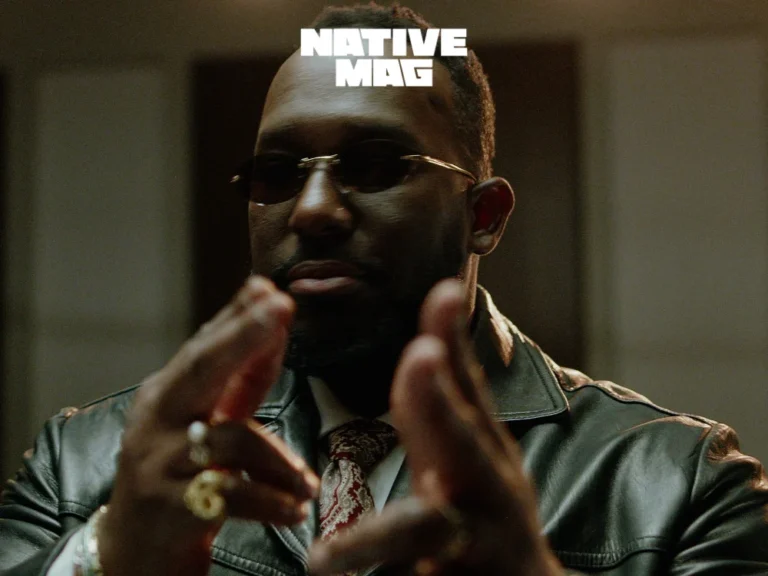
The global music landscape is currently defined by the erosion of traditional genre silos, a phenomenon best exemplified by the career of artist, songwriter, and producer Daramola. As the 2026 Latin Grammy Awards approach, Daramola finds himself at the center of critical acclaim, having secured a nomination for Record of the Year for his production work on Elena Rose’s emotive track, "Alma." This nomination serves as a professional milestone in a career defined by its geographic and stylistic fluidity, marking his transition from an experimental talent to a primary architect of contemporary cross-cultural soundscapes.
A Chronology of Artistic Evolution
Daramola’s ascent to the upper echelons of the industry was not an overnight occurrence but rather a calculated accumulation of experiences. His emergence on the scene in 2017 with the track "Lotto" signaled an early proficiency in merging the percussive urgency of Yoruba folk music with the atmospheric textures of electronic dance music. This foundational period allowed him to develop a signature "mercurial" sound that would eventually catch the attention of global powerhouses.
Following his initial breakthrough, Daramola significantly expanded his footprint. His involvement in the Bob Marley: One Love soundtrack earned him a Grammy Award, validating his ability to honor legacy acts while modernizing their sonic appeal. Over the intervening years, he became a fixture in the Latin music industry, establishing collaborative relationships with high-profile artists including Shakira, Alejandro Sanz, Sean Paul, and Beele. Each project served as an iterative process, refining his ability to bridge the gap between African rhythms and Latin pop sensibilities.
The Significance of Le Di Sentido
As he prepares for the release of his upcoming producer album, Le Di Sentido, Daramola is positioning his work as an investigation into personal and cultural identity. The album’s title, which translates to "I gave it meaning," reflects a deliberate effort to synthesize his life experiences—from his formative years in Nigeria and London to his time at an HBCU in Alabama and his current residency in Miami—into a cohesive artistic statement.
Industry analysts observe that Le Di Sentido represents a broader trend of "harmonic fusion," where producers no longer view genres as distinct containers but as a singular language. By incorporating collaborators such as Anitta, Danny Ocean, Kapo, and the Venezuelan ensemble Rawayana, Daramola is facilitating a dialogue between disparate musical traditions. The lead single, "Gidi 2 Caracas (La Musica)," is a definitive example of this synthesis, blending Nigerian logdrums with the tropical melodic structures characteristic of the Caribbean and Venezuelan pop scenes.
Technical Craft and Cross-Cultural Synthesis
Daramola’s methodology is rooted in an expansive musical education. His mother, herself a musician, exposed him to a spectrum of sounds ranging from Juju, Highlife, and Gospel to Disco and Country. This early exposure fostered a technical versatility that he now applies to modern production. His affinity for the songwriting of Sufjan Stevens and Bon Iver, paired with his reverence for the foundational work of Fela Kuti and Ebenezer Obey, creates a unique tension in his arrangements.
In recent studio sessions, particularly those involving influence from industry veterans like Tainy, Daramola has refined his approach to vocal production and synth arrangement. The objective, he notes, is to find a "sweet spot" where a track remains commercially viable and rhythmically resonant while maintaining the specific cultural sensitivities of his Nigerian heritage. This is particularly evident in his work with K-pop act i-dle on the track "Gimme Dat Love," which demonstrates the scalability of his production style across international markets.
Data and Industry Implications
The commercial performance of Daramola’s recent work provides empirical support for his strategy of borderless creation. Having achieved number-one rankings on the Latin Airplay, Latin Rhythm, and Latin Pop charts, he has demonstrated that there is a substantial, receptive audience for music that does not adhere to rigid categorization. These chart placements act as a barometer for the shift in consumer habits; listeners are increasingly prioritizing "vibe" and "texture" over traditional genre labeling.
Furthermore, his success as a Dove Award winner for his contribution to Lecrae’s 2011 album, Rehab: The Overdose, highlights his long-standing ability to traverse the intersection of faith-based music and secular pop. His background as a "church boy"—a term he uses to describe his early years spent playing drums in a Nigerian church—informs his understanding of communal, rhythmic energy. He effectively translates the "choirmaster" approach of directing large-scale sonic environments into the studio setting, ensuring that every element of a track serves the larger composition.
Official Perspectives and Artistic Philosophy
When asked about his nomination for the 2026 Latin Grammys, Daramola views it less as a personal triumph and more as a validation of his collaborative model. "It’s a vote of confidence in what you’ve built," he stated. His philosophy is grounded in the idea that music acts as a universal shelter for various traditions. By encouraging the natural evolution of sound, he avoids the trap of forcing a "singular sound" upon his listeners.
This communal approach is central to his role as a producer. He describes the recording process for Le Di Sentido as a "shared labor of love," emphasizing that the magic often happens when artists from different backgrounds—such as the members of Rawayana—are allowed to work without the pressure of forced trends. "They don’t try; it’s just on them, and that really served the music," he remarked regarding the studio environment.
The Future of Globalized Sound
The broader implications of Daramola’s work suggest a future where the "global citizen" archetype becomes the standard for music production. As he tells his own children that they are "a product of culture," he is simultaneously articulating the ethos of his career: that one can speak multiple "vocal languages"—Pidgin, Yoruba, Spanish, and the language of modern pop—within the same house.
As the industry continues to evolve, the role of the producer as a curator of cultural exchange will likely become even more prominent. Daramola’s trajectory provides a blueprint for how to navigate these complexities without sacrificing artistic integrity. By stewarding the direction of music through "harmonic fusion," he is not merely reacting to market trends; he is setting a framework for what global music will sound like in the coming decade.
The 2026 Latin Grammy Awards will serve as a platform to recognize these contributions, but the true impact of Daramola’s work will likely be measured by the continued success of the artists he produces and the longevity of the sounds he helps to cultivate. As he continues to blend the rhythmic vitality of Lagos with the melodic sophistication of Caracas and the production polish of Miami, Daramola remains a pivotal figure in the ongoing globalization of contemporary music. His journey from a young drummer in a Nigerian church to a Grammy-nominated producer on the world stage stands as a testament to the power of sonic synthesis and the necessity of artistic, borderless collaboration.