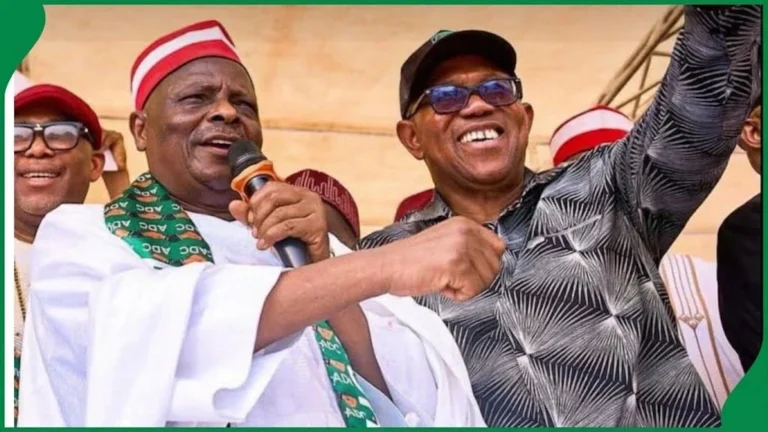
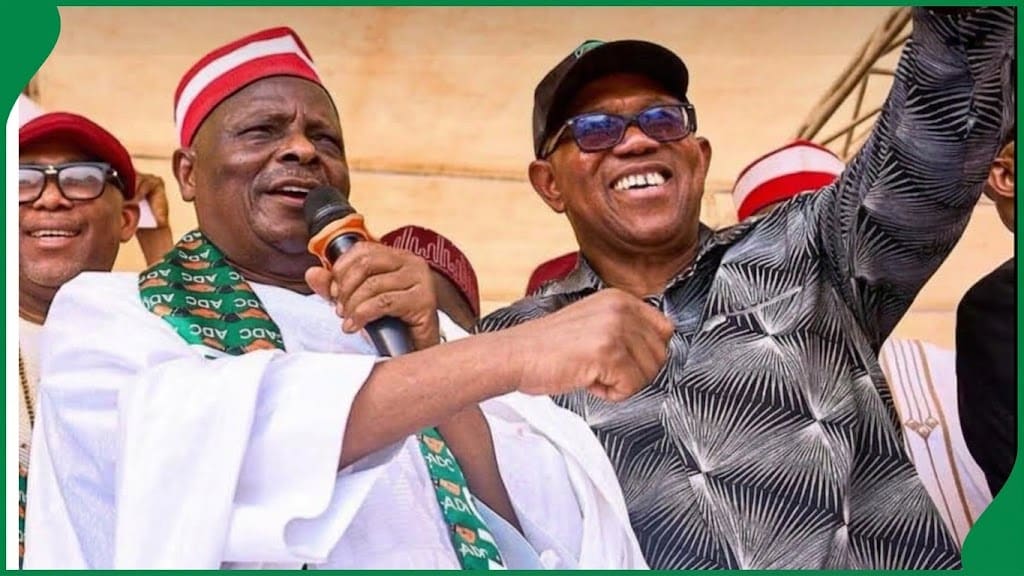
The landscape of Nigerian politics has been thrown into a state of retrospective scrutiny following a candid admission by the Nigeria Democratic Congress (NDC) vice-presidential candidate, Rabiu Kwankwaso. During a high-profile gathering at the 360 Event Centre in Dutse, Jigawa State, on November 8, 2026, the former Kano State Governor publicly lamented his decision to forgo a strategic electoral alliance with Peter Obi during the 2023 general election. This admission, coming nearly four years after the polls, signals a significant shift in the internal narrative of the opposition as they calibrate their strategy for the 2027 electoral cycle.
The 2023 Strategic Miscalculation
In the lead-up to the 2023 presidential election, the political atmosphere was defined by a surge of interest in the "Third Force" movement. While many stakeholders pushed for a merger between the platforms led by Kwankwaso and Peter Obi, the talks collapsed under the weight of disagreements over leadership structure and candidate hierarchy.
At the time, Kwankwaso, drawing on his extensive career as a former Minister of Defence, two-term Governor of Kano, and Senator, maintained that he possessed the necessary academic credentials—notably his PhD—and the requisite executive experience to lead a national ticket. Conversely, the momentum behind Peter Obi, fueled largely by a grassroots youth movement, sought a different trajectory for governance. The failure to reconcile these visions resulted in a fractured opposition, a development that many political analysts argue cleared a path for the All Progressives Congress (APC) to secure the presidency.
Addressing his supporters in Jigawa, Kwankwaso offered a sobering reflection: "I did not truly understand Peter Obi until now. Had I understood him better in 2023, we would have collaborated and ousted the All Progressives Congress from the presidency." This statement represents one of the most explicit acknowledgments of political error by a major Nigerian party leader in recent years.
A New Strategic Vision for 2027
The current rhetoric suggests that the NDC is positioning itself for a more collaborative approach in the 2027 cycle. Kwankwaso described the renewed prospect of an alliance with Obi as a "turning point for national development." Beyond mere electoral math, the NDC has begun outlining a governance framework that emphasizes specialized leadership. Notably, party insiders have confirmed that should the NDC achieve victory in 2027, the internal leadership consensus has earmarked the Ministry of Education portfolio for Kwankwaso.
This move is viewed as a calculated attempt to leverage his long-standing focus on educational reform in Kano State, where he oversaw massive scholarship programs and school infrastructure projects during his tenure. By defining his potential role in a future cabinet, Kwankwaso is attempting to shift the focus from the failures of 2023 to a substantive, policy-driven future.
Internal Strife and the APC Counter-Narrative
While the NDC seeks to consolidate its base, it remains embroiled in legal and internal challenges that the ruling All Progressives Congress (APC) is keen to exploit. The Kano State chapter of the APC has recently intensified its offensive against the NDC, particularly regarding the candidacy of Aminu Abdussalam Gwarzo.
Kwankwaso had previously accused the APC and Kano State Governor Abba Kabir Yusuf of orchestrating legal maneuvers to disqualify Gwarzo from the upcoming 2027 governorship race. The APC, however, has vehemently denied these claims, characterizing them as a "smokescreen" designed to distract from the NDC’s internal instability.
In a formal rebuttal, the APC stated that the legal challenges facing Gwarzo originated from within the NDC’s own ranks, rather than from external interference by the ruling party. "The legal action began with an internal crisis within the NDC," the party spokesperson asserted. "To suggest that the APC or Governor Yusuf is sponsoring these cases is an attempt to blackmail the judicial process and hide the cracks within their own party structure."
Historical Context and Political Volatility
The tension between the NDC and the APC in Kano is indicative of the broader volatility in the Nigerian political space as the 2027 countdown begins. Historically, Kano has been a pivotal battleground in Nigerian presidential politics, often serving as a barometer for the northern vote.
The timeline of these events is critical:
- Early 2023: Failed merger talks between Kwankwaso and Obi result in separate presidential bids.
- February 2023: General elections conclude with an APC victory, while the opposition parties divide the protest vote.
- Late 2026: As the 2027 election cycle approaches, internal opposition party fractures deepen, specifically regarding candidate eligibility.
- November 2026: Kwankwaso signals a shift toward a future coalition, seeking to repair the damage caused by the 2023 divide.
The current legal skirmishes surrounding Gwarzo’s candidacy are expected to continue through the early months of 2027, potentially draining the financial and organizational resources of the NDC. The APC’s strategy appears to be one of "containment," ensuring that the NDC remains occupied with internal litigation rather than mounting a unified national campaign.
Analytical Implications: Can a Coalition Work?
The prospect of a formal merger or a more robust alliance between the opposition factions faces significant hurdles. Firstly, the "personality politics" that derailed the 2023 talks remain a factor. For an alliance to be successful, both the NDC and the broader coalition supporting Obi must agree on a power-sharing formula that satisfies the egos and political bases of both leaders.
Secondly, the economic environment has changed drastically since 2023. Nigeria is currently grappling with inflation, tax policy debates, and currency volatility. Kwankwaso’s recent criticisms of the current administration’s tax policies indicate that the opposition intends to make the economy the cornerstone of their 2027 campaign. Whether they can successfully frame their proposed policies as a superior alternative to the current administration’s approach will depend on their ability to present a unified front.
Furthermore, the accusation of "blackmail" leveled by the APC highlights the fragility of party discipline. If the NDC cannot resolve its internal candidate selection issues, the argument for a "national coalition" will likely fall flat with voters who are looking for stability and effective governance.
Conclusion: Looking Toward 2027
The admission by Rabiu Kwankwaso serves as both a confession and a call to action. By acknowledging the missed opportunity of 2023, he is attempting to clear the air and position himself as a pragmatic leader willing to prioritize national interest over individual ambition. However, the road to 2027 is fraught with institutional challenges, legal battles, and the daunting task of convincing an increasingly skeptical electorate that a combined opposition can deliver better results than the status quo.
As the political maneuvering continues, the focus will remain on whether these leaders can transform their public statements of regret into a coherent, legal, and functional political vehicle. With the APC maintaining a firm grip on the narrative regarding internal opposition struggles, the pressure is squarely on the NDC to clean its own house before it can hope to return to the national stage as a unified force. The upcoming months will undoubtedly see a intensification of these legal and rhetorical battles, as the country prepares for a consequential electoral season that will test the resilience of Nigeria’s democracy.