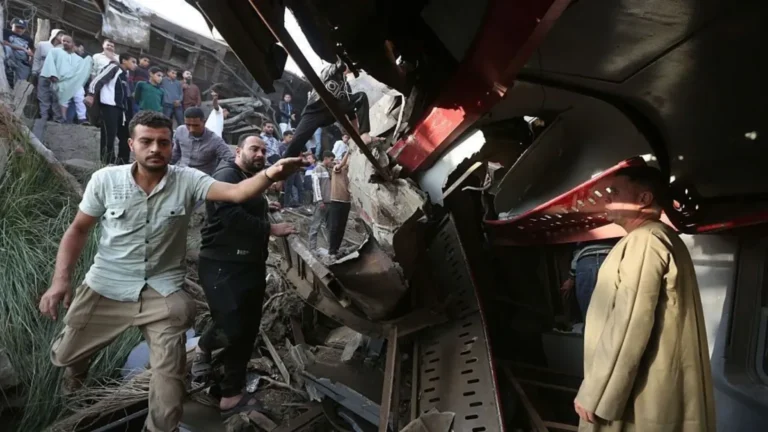
Tragedy struck the North African nation once again as a devastating railway collision near the Egyptian city of Giza claimed the lives of at least seven individuals and left more than one hundred others injured. The catastrophic accident, which occurred on the tracks between the Kafr Ammar and Al-Raqqa stations in Al-Ayyat, has renewed intense public scrutiny regarding the safety, modernization, and operational management of Egypt’s sprawling national railway network. As emergency responders, medical personnel, and local authorities scramble to manage the aftermath, the incident has triggered high-level government investigations, public outrage, and an outpouring of international solidarity.
The Crash and Immediate Aftermath
According to preliminary reports released by Egypt’s railway authority, the disaster unfolded when two southbound passenger trains met with disaster on the critical corridor linking major urban centers to Upper Egypt. The first train, operating a service from Giza to the agricultural governorate of Fayoum, collided with the rear of a second passenger service that had been traveling from Cairo to the southern tourist hub of Aswan. For reasons still under active investigation by federal authorities, the Cairo-to-Aswan train was stationary on the tracks at the moment of impact.
The force of the collision was catastrophic, causing several passenger carriages to derail violently and plunge off the tracks down a steep embankment. The mangled metal of the overturned coaches created a chaotic scene characterized by panic, dust, and cries for help. Uninjured passengers, local residents, and impromptu rescue bystanders rushed to the wreckage, bravely searching through the crushed carriages for survivors before specialized emergency crews arrived.
Egyptian Health Minister Dr. Khaled Abdel Ghaffar confirmed that the death toll stood at seven, though officials from the public prosecutor’s office cautioned that the number could rise as rescue operations conclude and intensive care units monitor the critical conditions of the most severely wounded. Among those confirmed dead was the driver of one of the colliding trains. More than one hundred people sustained injuries ranging from severe bone fractures and lacerations to traumatic head injuries and internal trauma. Regional hospitals across Giza and surrounding districts were immediately placed on heightened red alert, mobilizing medical staff, blood banks, and emergency triage units to cope with the sudden influx of casualties.
Chronology and Emergency Response
The swift mobilization of emergency services prevented an even greater loss of life, though logistical hurdles initially hampered rescue efforts in the rural stretch between Kafr Ammar and Al-Raqqa.
Hours after the collision, heavy machinery and high-capacity railway cranes were dispatched to the site to begin the arduous task of lifting the derailed carriages and clearing the blocked corridor. The Egyptian Red Crescent deployed specialized teams to the scene, providing immediate medical triage, trauma counseling, and psychological support services to traumatized survivors and grieving family members waiting anxiously for news at local hospitals and transit hubs.
Train services along the vital rail corridor connecting Giza to Upper Egypt were immediately suspended following the crash, stranding thousands of commuters and long-distance travelers. Transport authorities worked through the night to clear debris and repair damaged tracks, aiming to restore limited service as quickly as possible while forensic teams gathered evidence from the twisted wreckage.
Government Action and Accountability
The severity of the disaster prompted an immediate and direct response from the highest levels of the Egyptian government. President Abdel Fattah al-Sisi stepped in swiftly, issuing directives to all relevant security, judicial, and administrative agencies to launch a comprehensive, transparent investigation into the root causes of the crash. The president emphasized that absolute accountability must be enforced, vowing that any individuals found culpable of negligence, operational failure, or regulatory lapses will face severe legal consequences.
Concurrently, the public prosecutor’s office initiated a formal inquiry, summoning railway dispatchers, signal operators, and surviving crew members for questioning. Investigators are scrutinizing communication logs, signaling systems, and speed metrics to determine why the stationary train was unmoving on an active track and why the approaching locomotive failed to halt in time.
The political fallout was swift. The tragedy has reignited fiery debates within the Egyptian parliament and civil society regarding the accountability of leadership within the Ministry of Transport, with various political figures and advocacy groups issuing renewed calls for the resignation of the transport minister. Critics argue that despite billions injected into infrastructural overhauls in recent years, systemic human error and institutional inertia continue to threaten passenger safety.
A Troubled History: Egypt’s Railway Safety Crisis
The Al-Ayyat region where the crash occurred is unfortunately no stranger to transportation tragedies, carrying a grim legacy within the annals of Egyptian rail history. The area has previously been the site of major railway accidents, most notably a catastrophic fire in February 2002 that engulfed a packed passenger train traveling from Cairo to Luxor, killing more than 370 people and remaining the deadliest rail disaster in the nation’s history.
Egypt’s rail network is one of the oldest in Africa and the Middle East, boasting thousands of kilometers of track that transport millions of citizens daily. However, decades of chronic underinvestment, aging infrastructure, obsolete signaling systems, and widespread human error have plagued the system, leading to frequent derailments and fatal collisions.
Despite multi-billion-dollar modernization programs initiated by the Egyptian government in recent years—featuring international partnerships to upgrade signaling, procure new locomotives, and rehabilitate tracks—accidents continue to occur. Experts note that while capital investments in hardware are essential, transforming the network’s safety record requires rigorous, continuous training for operational staff, stringent enforcement of safety protocols, and a cultural shift toward proactive risk management within state-run enterprises.
Broader Economic and Social Implications
The disruption of the Giza-to-Upper Egypt railway line carries significant economic and social consequences. The rail network serves as the primary mode of affordable long-distance transportation for millions of working-class Egyptians, traders, and students traveling between the densely populated Nile Delta and the southern provinces. Prolonged suspensions of these trunk routes force commuters onto congested roadways, increasing transit costs and straining alternative transport infrastructure.
Furthermore, recurring infrastructure disasters pose reputational challenges for the state’s broader modernization agenda. International partners and investors watch closely to see how effectively the government manages critical public utilities and addresses structural vulnerabilities. The psychological toll on the general public is equally profound, as recurring transit accidents foster a pervasive sense of anxiety among everyday commuters who rely on trains for their daily livelihoods.
International Condolences and Solidarity
As Egypt mourns the victims of the Giza collision, expressions of grief and solidarity have poured in from across the international community. Foreign governments, diplomatic missions, and regional partners offered their condolences to the families of the deceased and wished the injured a swift recovery.
The Ministry of Foreign Affairs of Saudi Arabia issued a formal statement expressing deep sorrow over the tragedy, offering heartfelt condolences to the leadership, government, and people of Egypt while praying for the speedy recovery of those hospitalized. Similarly, the Turkish ambassador to Egypt conveyed deep sympathies, emphasizing the strong bonds of friendship between the two nations and standing shoulder-to-shoulder with the Egyptian public during a time of national grief. Other regional and international bodies echoed these sentiments, highlighting the global recognition of Egypt’s strategic and cultural importance.
Conclusion and Path Forward
The deadly collision near Giza serves as a stark, painful reminder of the urgent need for enduring structural and operational reform within Egypt’s national railway system. While immediate rescue operations, medical responses, and high-level investigations are critical first steps, the true test of governance will lie in the implementation of systemic preventive measures to ensure that such avoidable tragedies do not recur. As victims begin the long road to physical and emotional recovery, the Egyptian public and international observers alike will demand lasting accountability, transparent reforms, and a renewed commitment to passenger safety across the nation’s railways.