The pursuit of universal health coverage in Nigeria heavily relies on the functionality of primary health care (PHC) centres, which serve as the first line of defense for millions of rural and semi-urban dwellers. However, a comprehensive investigative report reveals significant discrepancies between the Kogi State government’s multi-billion-naira healthcare infrastructure claims and the reality on the ground. Despite official pronouncements of sweeping success, extensive field inspections across multiple local government areas expose a landscape marked by locked facilities, abandoned construction sites, acute staffing shortages, and critical utility deficits.
In January 2025, the Kogi State government announced a major financial commitment exceeding N7 billion, bolstered by World Bank support, aimed at upgrading 88 primary health care centres spanning the state’s 21 local government areas (LGAs). The formal flag-off, held at the Model PHC in Felele, Lokoja, featured directives for contractors to complete all assigned rehabilitation works within a strict four-month window. The overarching objective was to transform over 150 primary health facilities into fully functional Level 2 institutions, capable of delivering comprehensive 24-hour healthcare services, including basic emergency obstetric and neonatal care, reliable backup power, and steady access to clean water.
By November 2025, the state government reported a major milestone, announcing the formal commissioning of 80 revitalised PHCs. Muazu Musa, the executive director of the Kogi State Primary Health Care Development Agency, maintained that these facilities had successfully graduated from Level 1 status to fully operational Level 2 status. Yet, despite these optimistic administrative updates, independent on-the-ground investigations conducted between December 2025 and September 2026 uncovered a starkly different reality, characterized by incomplete physical infrastructure and non-functional service delivery points.

Procurement Analysis and Financial Discrepancies
A detailed examination of public procurement disclosures published by the Kogi State government reveals a complex financial footprint underlying the revitalisation initiative. Four primary infrastructure contracts encompassing 88 PHCs were awarded to distinct corporate entities: Multi Purpose Errand Mens Services Ltd, QSA Nigeria Ltd, Inknuel Ltd, and Base-SAN Ventures Nigeria Ltd. These contracts carried a combined financial value of N6.091 billion. According to the procurement records, approximately N5.516 billion—representing roughly 90.6 per cent of the total contract value—was recorded as disbursed to the contractors.

However, these procurement documents present notable inconsistencies. While government officials consistently maintained that the revitalisation programme covered all 21 LGAs in the state, the official procurement lot descriptions explicitly listed only 20 distinct LGAs. Kogi LGA, whose headquarters is situated in Koton-Karfe, was notably absent from the four designated lots. While this omission does not definitively prove exclusion from the wider intervention, the lack of a transparent, publicly accessible master list of the 88 beneficiary facilities prevents independent verification of geographic equity.
Furthermore, the aggregate contract value of N6.091 billion falls considerably short of the N7 billion figure initially announced by the state administration. Public records offer no clear reconciliation of the financial gap between the stated budgetary commitment and the actual value of the awarded infrastructure contracts. Additional financial tracking through the state’s 2025 fourth-quarter Budget Implementation Report showed a final budget allocation of N8.205 billion for the broader Immunisation Plus and Malaria Progress by Accelerating Coverage and Transforming Services (IMPACT) programme, with a cumulative year-to-date expenditure of N7.818 billion. Because the IMPACT programme encompasses a much wider scope of public health interventions beyond physical infrastructure rehabilitation, its expenditures cannot be directly equated to the specific 88 PHC upgrade projects.

Case Studies from the Field: Ankpa, Lokongoma, and Ganaja
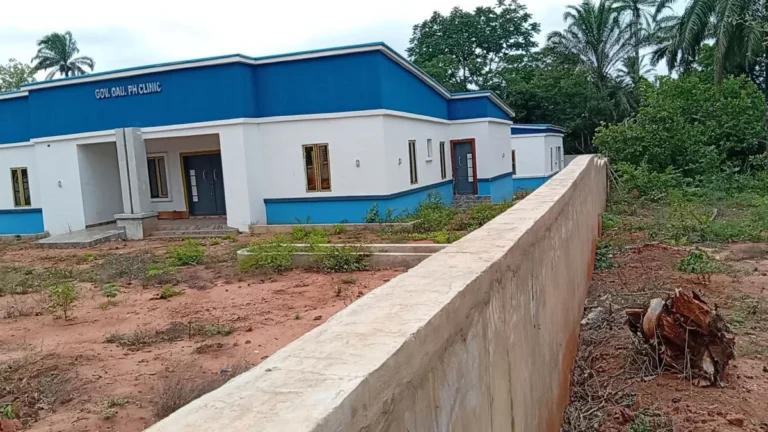
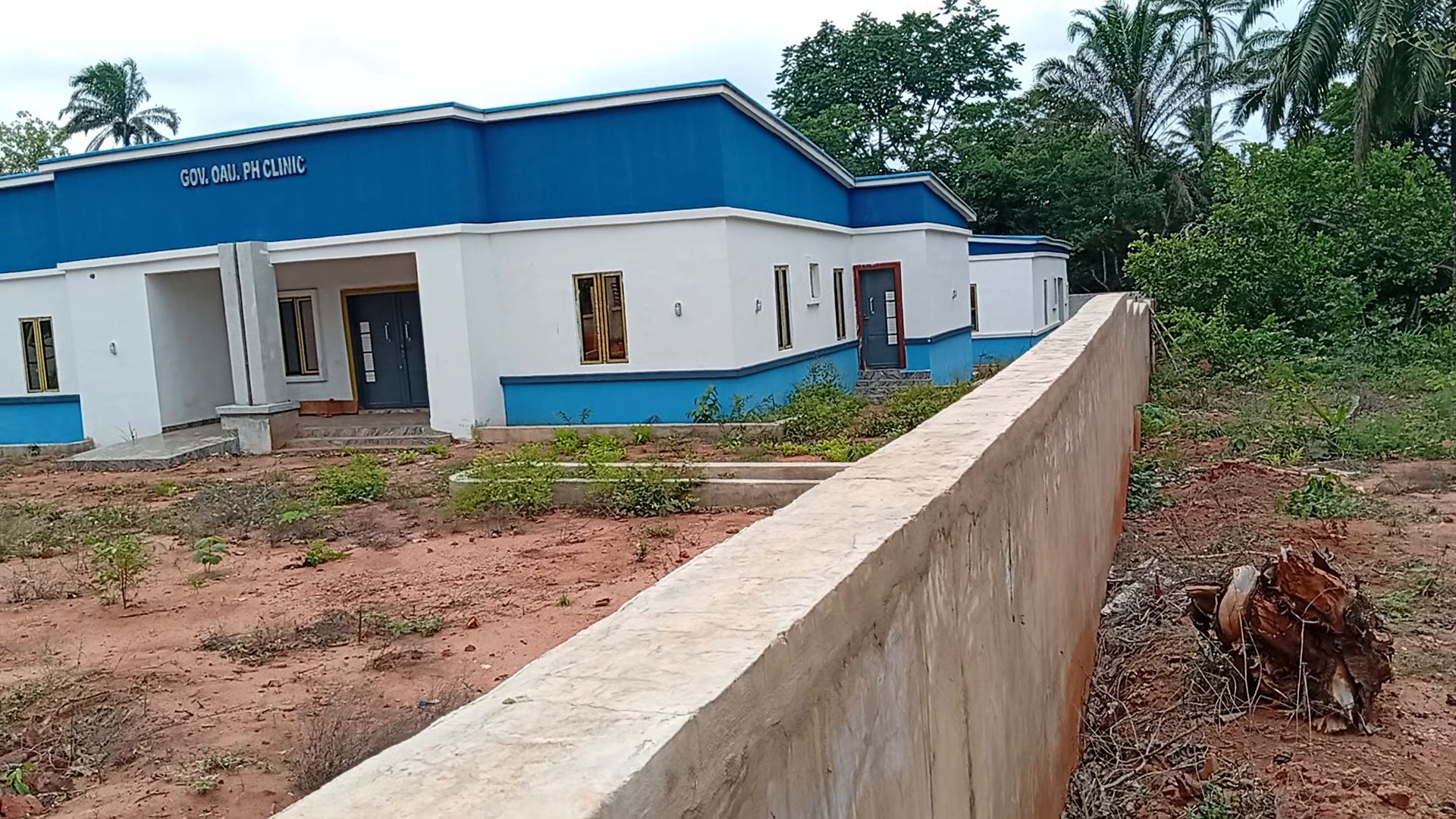
Field inspections conducted by journalists across Ankpa, Lokoja, and Ajaokuta LGAs illustrate the operational bottlenecks facing the revitalised health centers. At the OAU Primary Health Centre in Ojoku, Ankpa LGA, initial visits in December 2025 and subsequent follow-ups in May 2026 revealed a building that appeared deceptively new from the exterior, featuring fresh blue-and-white paint, intact roofing, and fitted doors and windows. Nevertheless, closer inspections showed that the facility remained completely locked, devoid of medical personnel, and entirely non-operational.

Aminu Nuhu, the head of the Department of Health Services at the Ankpa Local Government Council, acknowledged that OAU PHC Ojoku was one of six facilities selected for revitalisation. He explained that the council was struggling to recruit and deploy health workers to staff the newly renovated structures. Beyond personnel shortages, infrastructure gaps crippled basic operations. Although a borehole had been successfully drilled on the premises, it remained useless due to the total absence of electrical grid connectivity or solar power installations required to drive the water pump. A local security guard stationed at the facility confirmed that the interior remained empty, housing no medical equipment or supplies.
At the Primary Health Care Centre in Ankpa (PHCC Ankpa), clinical services were active, with staff handling routine immunizations, antenatal care, and outpatient consultations. However, the facility grappled with severe systemic deficiencies. Momo Oneshona, the officer-in-charge, reported that the clinic operated without running water, grid electricity, or general-purpose solar power, relying on a solitary solar unit dedicated solely to vaccine refrigeration. Reusable medical instruments were sterilized by boiling them over domestic gas or ordinary stoves.

Moreover, physical rehabilitation work at PHCC Ankpa had stalled indefinitely. Construction workers had dismantled doors and window frames, piling them inside the building before abandoning the site between December 2025 and January 2026, leaving gaping structural openings exposed to the elements. During a subsequent visit in September 2026, recent rainfall had flooded sections of the facility’s laboratory, leaving visible water pools on the floor and damp, discolored patches on the walls. Project signboards at the site identified the intervention as part of the Kogi State IMPACT Project 2024, listing "BASESAN VENTURE NIG LTD" as the contractor. This corporate identity raised further questions, as public procurement disclosures identified the contractor as "Base-SAN Ventures Nigeria Ltd," and corporate registry checks linked a similarly named entity to figures with significant political ties, highlighting transparency gaps in project execution.
In Lokoja, the Lokongoma PHC presented a similarly ambiguous timeline. While local residents and health workers confirmed the facility was integrated into the state’s revitalisation framework—showcasing a new perimeter fence, paved courtyard, and fresh paint—subsequent photographic evidence documented continuous construction activity months after official commissioning milestones. New roofing structures and paving were added sequentially through May, July, and September 2026, raising questions regarding the sequencing of renovation phases, the scope of work, and the criteria used to determine project completion.

Perhaps the most striking illustration of infrastructural delay is found at the Ganaja PHC in Ajaokuta LGA. Nearly eight years after severe flooding forced health workers to abandon their original facility, medical services continued to be administered from two borrowed classrooms inside UBE Standard College. The temporary arrangement severely constrained healthcare delivery; the cramped classroom space precluded patient admissions, overnight stays, and maternal delivery services. Pregnant women requiring childbirth assistance were routinely referred to distant alternative centers. While local officials noted that a replacement facility was under construction elsewhere in Ganaja, the lack of clear geographic directions, verifiable progress reports, or definitive completion timelines left hundreds of residents reliant on makeshift accommodations indefinitely.
Administrative Opacity and Accountability Gaps

Throughout the multi-month investigation, repeated attempts to secure official documentation from the Kogi State government met with administrative resistance. On 15 May 2026, formal requests for information were submitted under Nigeria’s Freedom of Information Act 2011 to both the Kogi State Ministry of Health and the Kogi State Primary Health Care Development Agency. The applications sought comprehensive inventories of primary health facilities, details of contract awards, payment statuses, disbursement records under the Basic Health Care Provision Fund, and staffing schedules.
Subsequent follow-up communications directed to the Commissioner for Health, agency secretarial staff, and the Commissioner for Information and Communications, Kingsley Fanwo, failed to yield substantive disclosures. The state government did not provide the complete schedule of the 88 beneficiary facilities, the official roster of the 80 commissioned centers, or individual project inspection reports and completion certificates.

The absence of these vital documents creates a profound accountability vacuum. While the lack of verifiable records does not automatically imply the diversion of public funds or contractual fraud, it severely curtails public scrutiny and independent verification. Without transparent access to facility-level scopes of work and inspection certifications, citizens and independent observers remain unable to determine whether the multibillion-naira public investment in Kogi State’s primary healthcare sector has genuinely delivered functional, resilient, and accessible medical services to the rural populations who need them most.