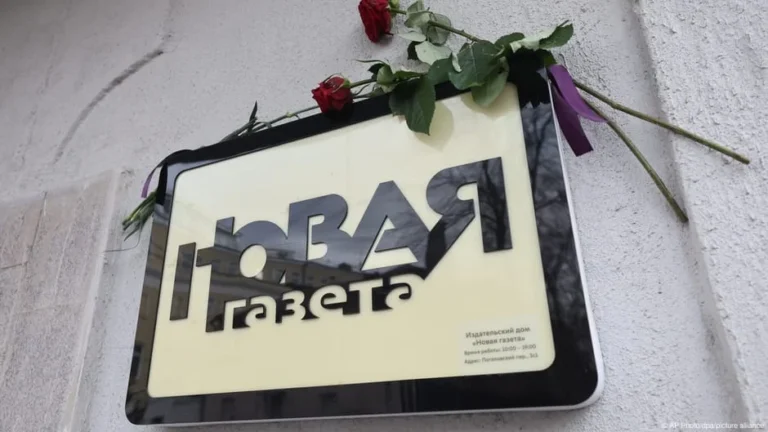
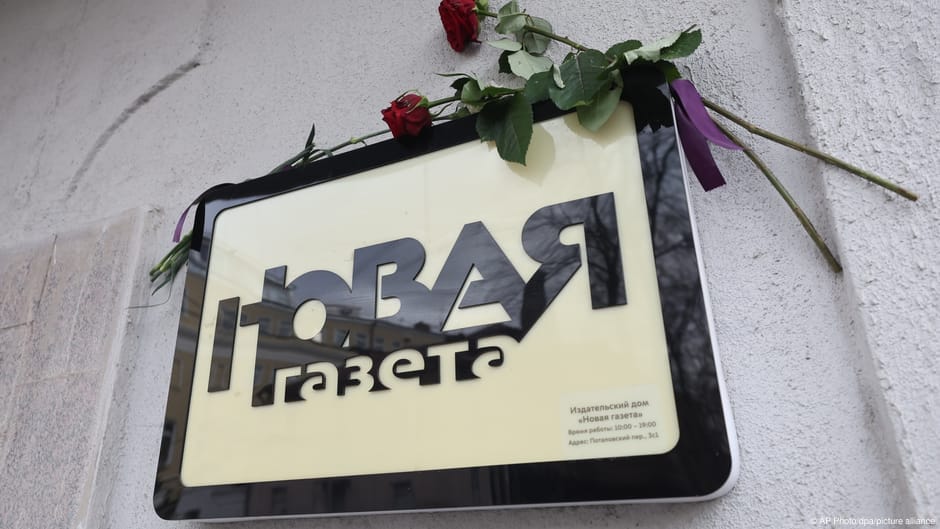
The shutters have officially closed on the Moscow office of Novaya Gazeta, an event that signals the definitive end of an era for independent journalism in Russia. On Monday, November 9, 2026, staff members gathered one last time to clear out the editorial workspace, marking the termination of a publication that served as a beacon of investigative rigor for over three decades. This closure is not merely an administrative shift; it is the culmination of a systematic, years-long campaign of state pressure, legislative strangulation, and direct intimidation that has left the landscape of Russian media almost entirely devoid of dissenting voices.
A Legacy Born from Glasnost
Novaya Gazeta was founded in 1993, shortly after the collapse of the Soviet Union, during a period of optimism surrounding the "glasnost" policy of openness. Its inception was supported by Mikhail Gorbachev, the final leader of the USSR, who utilized a portion of his 1990 Nobel Peace Prize winnings to provide the initial capital for the newspaper. From its earliest days, the publication established a reputation for unflinching investigative reporting. It became a sanctuary for journalists who sought to expose high-level corruption, human rights abuses, and the dark underbelly of the newly formed Russian state.
The cost of this integrity was staggeringly high. In its thirty-three-year history, six of the newspaper’s journalists were murdered in connection with their professional work. The most iconic of these cases remains the 2006 assassination of Anna Politkovskaya, who had spent years documenting the brutal realities of the Chechen wars and the erosion of democratic norms under Vladimir Putin’s early presidency. Her death, occurring on the president’s birthday, served as a chilling precursor to the environment that would eventually force the paper into extinction.
A Chronology of Suppression
The downward trajectory of Novaya Gazeta accelerated dramatically following the full-scale Russian invasion of Ukraine in February 2022. The Kremlin’s implementation of draconian wartime censorship laws effectively criminalized any reporting that deviated from the official state narrative.
- February 2022: The Russian government introduces strict censorship laws, forcing independent outlets to censor their own coverage of the invasion or face closure.
- March 2022: Under extreme duress, Novaya Gazeta transitions to a fully online format, attempting to circumvent print-based restrictions.
- September 2022: The publication is stripped of its media license by a Russian court, following a lawsuit filed by Roskomnadzor, the state communications regulator.
- 2023–2025: The Russian administration labels the paper a "foreign agent," a legal designation that requires burdensome financial disclosures and stigmatizes the outlet. Financial channels are systematically blocked as banks are forbidden from processing reader donations.
- October 2026: Editor-in-chief Sergei Sokolov announces that the newspaper has been "killed" by the persistent, coordinated efforts of the Russian security services.
- November 9, 2026: The Moscow office is officially shuttered, and the remaining staff vacate the premises.
The Financial and Legal Stranglehold
The strategy employed by the Russian state against Novaya Gazeta was multifaceted, targeting both the physical safety of its reporters and the economic viability of the enterprise. By labeling the outlet a "foreign agent," the Kremlin ensured that the newspaper would be viewed with suspicion by the public and isolated from institutional support.
The most lethal blow, however, was economic. Following the 2022 invasion, the newspaper relied heavily on crowdfunding from its readership to maintain its online operations. By pressuring Russian banks to refuse transfers to and from the paper, the state effectively cut off the outlet’s oxygen. This "financial siege" is a hallmark of the current Russian administration’s approach to dissent: rather than relying solely on overt arrests, the state utilizes bureaucratic and financial tools to render opposition media functionally impossible to sustain.
Official Responses and the "Rotational" Narrative
The Kremlin’s response to the closure has been characterized by a calculated attempt to minimize the event’s gravity. Spokesman Dmitry Peskov described the disappearance of one of the country’s most respected institutions as a "rotational process" within a "fiercely competitive media landscape." This framing suggests that the closure is merely a market-driven outcome rather than the result of state-sponsored dismantling.
This official narrative stands in stark contrast to the sentiments expressed by 2021 Nobel Peace Prize laureate and founding editor Dmitry Muratov. Speaking to the assembled staff on the final day, Muratov did not mince words regarding the state of the nation. "Those in our country who advocate for peace have been denied the right to read what they choose," he remarked. He argued that the closure is a symptom of a broader constitutional collapse, stating, "We are currently at a point where the section of the Russian constitution that guarantees political and civil rights has ceased to function."
Broader Implications for Russian Society
The silencing of Novaya Gazeta leaves a massive vacuum in the Russian media space. Independent data suggests that the closure of such outlets has significantly altered the information ecosystem for the average Russian citizen. With the removal of independent investigative journalism, state-controlled media—which predominantly aligns with Kremlin objectives—now holds a near-total monopoly on information.

The implications for the Russian public are profound. Independent surveys have shown that as critical outlets are shuttered, the ability of citizens to access alternative viewpoints regarding the war in Ukraine and domestic policy has reached an all-time low. Furthermore, the closure serves as a warning to any remaining pockets of dissent: the state is prepared to use all its resources to ensure that domestic media remains a mirror for government propaganda rather than a watchdog of power.
A Future in Exile or a Silent End?
As of mid-November 2026, the leadership of Novaya Gazeta has remained ambiguous about whether they intend to regroup and operate from abroad. The history of Russian journalism in the last four years shows that many outlets—including those that have faced "undesirable" labels—have attempted to continue their work from European or Central Asian capitals. However, such a transition is fraught with technical and security challenges, including the risk of severe legal repercussions for staff members who remain inside the country.
Journalist Irina Vorobyova, reflecting on the closure, suggested that the institution’s impact transcends its physical office. She described the paper’s spirit as a "good virus" that would "continue in everyone that was part of it." While this sentiment provides a modicum of hope for those who value press freedom, the cold reality is that the physical, administrative, and financial infrastructure that allowed Novaya Gazeta to hold the powerful to account for over thirty years has been dismantled.
The final images from the Moscow office—photographs of murdered journalists being removed from the walls—serve as a somber conclusion to a chapter of Russian history that was defined by a courageous, often dangerous, pursuit of truth. Whether this "virus" of journalism can survive in an era of absolute state control remains one of the most pressing questions for the future of Russian civil society. As it stands, the closure represents the silencing of one of the last remaining pillars of the post-Soviet democratic dream, leaving behind a media landscape where, for the first time in decades, the investigative gaze has been entirely averted.