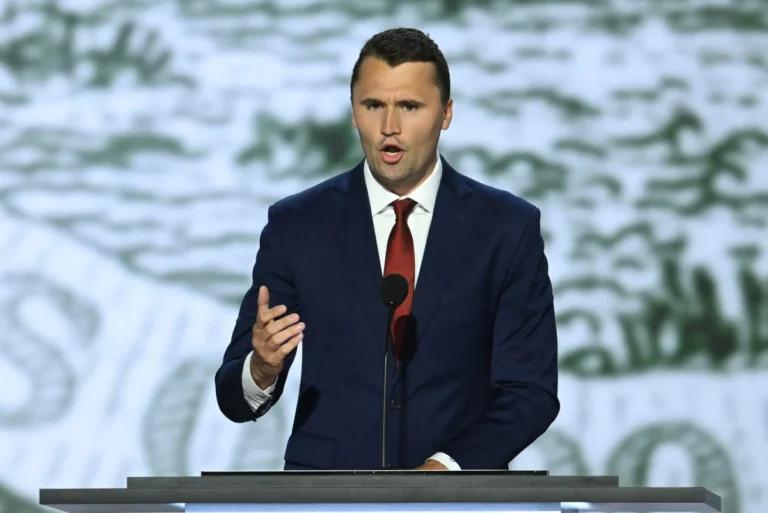
The high-profile legal proceedings surrounding the tragic death of prominent conservative activist and Turning Point USA founder Charlie Kirk have reached a major milestone, with a Utah state judge officially scheduling the trial of the accused gunman for June 2028. Utah District Court Judge Tony Graf set the date during a procedural hearing, opting for a middle-ground timeline that balanced the intense public and political pressure for a swift resolution against the intricate legal demands of a potential capital punishment case.
Tyler Robinson, 23, stands accused of aggravated murder and related felony charges stemming from the September 10, 2025, shooting at Utah Valley University, which cut short the life of the 31-year-old political figure. Robinson has entered a plea of not guilty and continues to be held without the possibility of bail as defense attorneys and state prosecutors clash over evidentiary standards, DNA reliability, and pre-trial motions. The decision to slate jury selection for June 21, 2028, concludes months of contentious scheduling debates that pitted the grieving family’s desire for closure against the defense team’s argument that meticulous preparation is an absolute prerequisite in any trial where the state is actively pursuing the death penalty.
The Chronology of a Tragedy and Manhunt
The events leading to the courtroom scheduling battles began in the early autumn of 2025. On September 10, 2025, Charlie Kirk was visiting Utah Valley University to participate in a public speaking engagement and engage with students on contentious political topics, including national security, free speech, and gun violence. While addressing an audience member’s inquiry concerning firearms policy, a single shot rang out, striking Kirk in the neck. Investigators later established that the projectile had been fired from an elevated vantage point on a nearby rooftop, situated approximately 415 feet away from the podium, using a precision bolt-action rifle.
Emergency responders rushed Kirk to a medical facility, but he succumbed to his injuries, sending shockwaves across the American political landscape. In the immediate aftermath, law enforcement agencies launched a massive, multi-jurisdictional manhunt led by local authorities and the Federal Bureau of Investigation. The turning point in the investigation occurred when the FBI released photographs of a person of interest captured by security cameras near the campus. Upon recognizing their son in the widely distributed images, Robinson’s parents contacted law enforcement, facilitating his peaceful surrender the following day.
Forensic teams subsequently scoured the area surrounding Utah Valley University, discovering a rifle wrapped in a protective towel in a wooded tract near the campus perimeter. Ballistics and forensic analysis linked the firearm to the crime scene through a recovered spent shell casing, alongside three unspent cartridges bearing distinct engraved messages. Prosecutors further bolstered their preliminary case by uncovering digital communications, alleging that Robinson had confessed to the shooting via a text message sent to his roommate shortly after the incident occurred.
Clashing Legal Timelines and Family’s Plea for Urgency

The scheduling phase of the judicial proceedings has been marked by fierce advocacy from all corners, reflecting the extraordinary public interest attached to the case. Prosecutors initially indicated that a trial commencement date around January 31, 2028, would be appropriate, allowing both sides ample time to process complex scientific and digital evidence. Conversely, Robinson’s court-appointed defense counsel argued that a trial slated for the third quarter of 2029 was far more realistic, emphasizing the staggering volume of discovery materials and the life-or-death stakes inherent in a capital murder prosecution.
Caught in the middle of these administrative delays are the members of Kirk’s immediate family, who have voiced profound anguish over the protracted timeline. Erika Kirk, the widow of the slain activist, formally petitioned the court through legal counsel to accelerate the proceedings, pointing to the psychological toll that an extended legal battle would inflict on the couple’s two young children.
In a poignant court filing submitted by attorney Jeffrey Neiman, the family underscored the surreal nature of a judicial process that threatens to outlast the formative memories of the victims. Under the defense team’s initially preferred schedule, the children—who were merely one and three years old at the time of their father’s assassination—would reach the ages of six and eight before a verdict was ever rendered. The filing noted that the youngsters would live under the prolonged shadow of criminal proceedings for a span of time exceeding their entire lived experience with their father. Despite these heartfelt appeals, Judge Graf’s mid-2028 docket placement represents an administrative compromise designed to prevent constitutional violations regarding speedy trial rights while accommodating the exhaustive nature of death penalty litigation.
Political Repercussions and Executive Pressure
The murder of Charlie Kirk transcended a standard local homicide investigation, quickly transforming into a national flashpoint that drew intense scrutiny from Washington, D.C., and high-ranking political figures. President Donald Trump has repeatedly taken to public platforms to voice his profound dissatisfaction with the pace of the judicial system in Utah, directing sharp criticism toward Judge Graf.
In a widely circulated post on his Truth Social platform, President Trump accused the presiding judge of undermining the dignity of the legal system and "desecrating the memory of the Great Charlie Kirk" through administrative delays. The public intervention by the executive branch highlights the intense political polarization surrounding the case and underscores the immense pressure resting on the shoulders of the state judiciary to ensure that the proceedings are handled with transparency, fairness, and expedited efficiency.
Legal experts, however, point out the delicate balancing act required in capital cases. Courts must rigorously safeguard the constitutional rights of the accused to prevent successful appellate reversals down the road, while simultaneously managing public expectations for immediate retribution. Judge Graf’s September ruling—which affirmed that prosecutors had met the legal threshold of probable cause to move forward with a trial and authorized them to pursue capital punishment—demonstrated the court’s willingness to keep the substantive case moving despite logistical hurdles.
Defense Strategies and Evidentiary Challenges

As the 2028 trial date looms on the horizon, legal analysts are closely monitoring the defensive strategies being formulated by Tyler Robinson’s legal team. While the defense has not formally pointed toward an alternative suspect, they have signaled an aggressive challenge to the prosecution’s forensic evidence. Attorneys have begun filing motions questioning the reliability, collection methods, and chain of custody regarding the DNA samples and physical items recovered during the investigation.
In capital litigation, forensic challenges often form the bedrock of a defense strategy, particularly when physical items such as the recovery rifle, the ballistic casings, and digital communications form the core of the state’s narrative. The painstaking process of verifying laboratory testing protocols, consulting independent expert witnesses, and conducting pre-trial evidentiary hearings accounts for the vast stretches of time mandated prior to the commencement of jury selection.
Broader Societal Implications and the Shadow of Political Violence
Beyond the courtroom battles in Utah, the impending trial of Tyler Robinson serves as a grim reminder of the deteriorating state of civil discourse and the escalating threat of political violence within the United States. Charlie Kirk’s death galvanized conservative movements nationwide, prompting renewed security dialogues regarding the protection of public figures, campus speakers, and political organizers.
As the founder of Turning Point USA, Kirk had built a massive following by mobilizing young Americans around conservative principles, making him a polarizing yet undeniably influential figure in modern American politics. His assassination at a university venue struck at the heart of free expression and academic openness, igniting fierce debates over how institutions balance public safety with the unrestricted exchange of ideas.
The trial, when it finally commences in June 2028, is expected to command global media attention and serve as a watershed moment for the American judicial system. With a human life hanging in the balance, alongside profound questions regarding security failures, radicalization, and the rule of law, the courtroom proceedings in Utah will undoubtedly dominate headlines for years to come as the nation awaits a final verdict in a case that forever altered the landscape of American political activism.