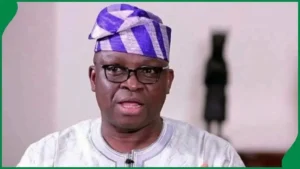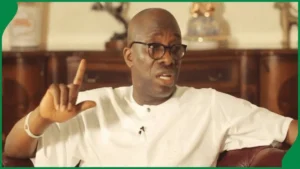
The presidential candidate of the Allied Peoples Movement (APM), Seyi Makinde, has declared that Nigerians will use the 2027 general election to challenge the ruling All Progressives Congress (APC) over the prevailing socioeconomic hardships facing the country. During a high-stakes governorship rally in Oyo town, Oyo State, held on Saturday, November 14, 2026, Governor Makinde framed the upcoming electoral cycle not merely as a contest between political parties, but as a definitive struggle between the incumbent administration and the Nigerian populace.
The rhetoric employed by the Oyo State Governor underscores an intensifying political climate as the nation approaches the 2027 polls. With the APM positioning itself as a vehicle for systemic change, Makinde’s assertions reflect a broader sentiment of discontent circulating within various strata of Nigerian society regarding the current economic trajectory and the state of national security.
The Political Context: A Shift in Alliances
Seyi Makinde, who currently serves as the Governor of Oyo State, has emerged as a significant figure in the 2027 presidential race under the banner of the Allied Peoples Movement (APM). His transition to the APM presidential ticket represents a major realignment in Nigeria’s political landscape. Historically, the APM has operated as a mid-tier political entity, but under the current leadership of Makinde, the party is aggressively rebranding itself as a viable alternative to the dominance of the APC and the Peoples Democratic Party (PDP).
The rally in Oyo town served as a strategic platform for the candidate to solidify his grassroots base. By choosing a local government stronghold for such a bold declaration, Makinde signaled that his campaign strategy relies heavily on regional mobilization and the translation of local governance success into national political capital.
Economic Hardship and the Voter Sentiment
The core of Makinde’s critique centers on the persistent economic challenges that have characterized the last few years of the APC-led administration. Nigeria has faced unprecedented inflationary pressures, with the cost of basic food items, fuel, and essential services reaching record highs by late 2026.
Data from the National Bureau of Statistics (NBS) and various international financial monitors have consistently highlighted a decline in purchasing power for the average Nigerian household. The removal of fuel subsidies and the subsequent floating of the naira have led to a volatile economic environment. While the government has argued that these measures are necessary for long-term fiscal stability, the short-term impact on the cost of living has been severe.
Makinde’s statement that "this election is between APC and Nigerians" is a direct appeal to the electorate’s sense of economic agency. He argues that the ballot box serves as the most potent instrument for citizens to hold leadership accountable for policy outcomes that have negatively impacted their standard of living.

Chronology of the 2027 Election Cycle
The countdown to the 2027 general election has been marked by a series of political maneuvers and public discourse. Below is a timeline of key developments leading up to the current climate:
- Early 2026: Political parties begin the process of internal restructuring and candidate screening. The APC maintains its hold on power while facing internal debates regarding policy direction.
- Mid-2026: The emergence of Seyi Makinde as the APM presidential candidate shifts the political narrative, bringing significant attention to the party’s platform.
- October 2026: Nationwide debates regarding the impact of current fiscal reforms gain momentum, with opposition parties criticizing the federal government’s handling of the inflation crisis.
- November 14, 2026: Governor Seyi Makinde addresses the Oyo rally, officially framing the 2027 election as a "referendum" on the APC’s performance.
- Late 2026 – Early 2027: Expected intensification of campaign activities, policy debates, and coalition building among opposition parties.
Official Responses and the APC Stance
While the APC has not issued a formal rebuttal to every specific claim made by the APM candidate, representatives of the ruling party have consistently maintained that the current administration is laying the foundation for a more resilient economy. Government spokespersons have often pointed to long-term infrastructure projects, agricultural support schemes, and digital economy initiatives as proof that the government is working to correct systemic failures inherited from previous administrations.
Critics within the ruling party argue that the economic hardships are "transitory pains" resulting from necessary structural reforms. They contend that the opposition, including the APM, is engaging in populist rhetoric rather than presenting comprehensive policy alternatives. As the election draws closer, the ideological divide between the APC’s "reformist" narrative and the opposition’s "survival" narrative is expected to widen.
The Role of Security in the 2027 Narrative
Beyond the economy, insecurity remains a dominant factor in the 2027 discourse. Persistent threats from banditry, insurgency, and communal conflicts in various parts of the country have tested the federal government’s security architecture.
Makinde’s critique suggests that the security situation has failed to meet the expectations of the citizenry. In his address, he implied that the lack of safety has hindered economic productivity, particularly in the agricultural sector, which is vital for the survival of many rural communities in Oyo State and beyond. The ability of the electorate to vote freely and safely in 2027 will likely be a litmus test for the Independent National Electoral Commission (INEC) and the security agencies.
Implications of the APM Strategy
The declaration by the APM presidential candidate has several critical implications for the forthcoming election:
- Voter Mobilization: By framing the election as a personal choice for the citizen, Makinde is attempting to increase voter turnout, particularly among the youth and those disillusioned with the traditional two-party system.
- Increased Political Polarization: The "APC vs. The People" narrative risks deepening the divide between the government and the governed, potentially leading to a more confrontational campaign season.
- Policy Pressure: The ruling party may find itself forced to accelerate social intervention programs to mitigate the perception of hardship before the polls open.
- The Rise of Third-Party Platforms: The visibility of the APM in this cycle demonstrates that voters are increasingly open to candidates outside the traditional APC/PDP duopoly, provided those candidates can effectively articulate the frustrations of the masses.
Conclusion
As the 2027 general election approaches, the political temperature in Nigeria is rising. The declaration by Seyi Makinde at the Oyo town rally is a clear indication that the opposition intends to make the economy and the standard of living the primary battleground for the presidency. Whether this strategy will yield success at the polls remains to be seen, but it is evident that the narrative of "hardship vs. progress" will dominate the discourse in the coming months.
For the Nigerian electorate, the 2027 election represents a crucial moment to decide the nation’s future direction. With the ballot box as their primary tool, citizens are being urged by figures like Makinde to take ownership of the political process and demand the change they desire. As the campaign trail continues, the strength of these messages will be tested by the reality on the ground, the efficacy of the candidates’ platforms, and the ultimate collective decision of the Nigerian people. The months ahead promise a vigorous debate over the soul of the nation’s governance and the path toward economic recovery.